10 Best Prop Firms in 2026 Compared for Futures Traders
Best prop firms 2026 compared by Goat Funded Futures. See which futures trading firms offer the best funding, profit splits, and terms.
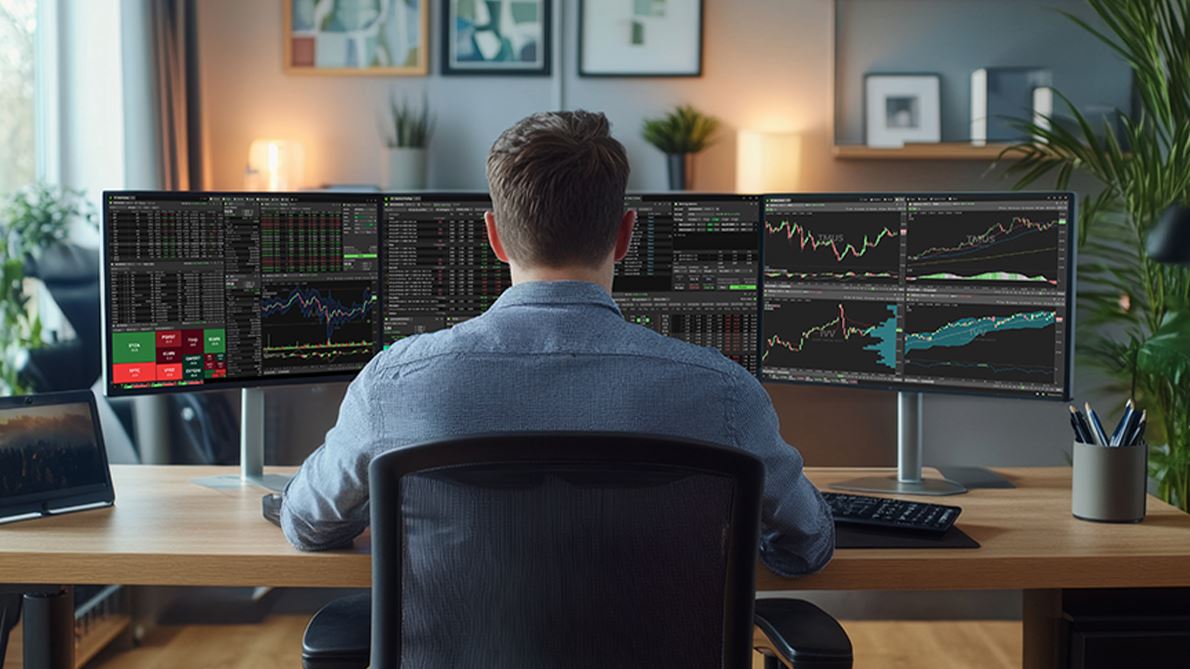
The futures trading landscape has evolved significantly, offering traders more opportunities than ever to secure capital and accelerate their professional growth. Navigating the crowded field of futures prop firms requires careful evaluation of profit splits, funding limits, evaluation processes, and trading rules that align with individual strategies. Smart traders focus on firms that prioritize consistent performance over arbitrary requirements while offering competitive terms and reliable support.
Successful futures traders understand that choosing the right funding partner directly affects their ability to scale without risking personal capital. The best prop firms in 2026 combine fast funding processes, flexible withdrawal options, and trader-focused support systems that reward skill and proper risk management. For traders ready to take their futures trading to the next level, partnering with a reputable futures prop firm can provide the capital and structure needed to transform trading skills into sustainable income.
Table of Contents
The Problem With Most "Best Prop Firm" Rankings
10 Best Prop Firms in 2026 Compared
How Different Prop Firm Models Affect Trading Performance
Which Prop Firm Is Best for Your Trading Style?
Questions to Ask Before Joining Any Prop Firm
Why Many Futures Traders Choose Goat Funded Futures
Start Trading Futures Today with our Futures Prop Firm
Summary
Most prop firm rankings focus on account size and profit splits rather than the operational rules that determine whether traders can actually execute their strategies. Surface-level metrics like maximum funding amounts and advertised profit percentages reveal little about daily trading experience. The gap between marketing claims and actual trading conditions explains why many funded traders reset accounts or leave within 90 days.
Drawdown calculation methodology shapes every position management decision traders make. Trailing drawdowns that adjust continuously throughout sessions can force scalpers to reduce position sizes or exit winning trades prematurely, while end-of-day calculations give intraday traders flexibility to manage normal volatility without triggering violations. The wrong drawdown structure can make a trading strategy mathematically impossible to execute, regardless of account size.
Payout policies matter more than profit split percentages when converting trading performance into actual income. Some firms process withdrawals within 48 hours with no minimum threshold, while others require a $500 minimum, a 10-day processing window, and three consecutive profitable weeks before the first payout. That operational difference determines whether trading functions as income or delayed gratification.
Evaluation-based funding creates psychological pressure that overrides risk discipline for most traders. Traders who pass evaluations safely risk less than 1% per trade and take 30 to 60 days to complete them, not the rushed two-week attempts that blow accounts. The challenge phase itself becomes the obstacle, with most traders never reaching funded status because evaluation pressure forces them to trade differently than their strategy requires.
Hidden costs beyond challenge fees quietly erode profitability across many prop firms. Activation fees, platform fees, reset costs, and recurring administrative charges often appear only after traders pass evaluations, turning attractive profit splits into mediocre returns once all expenses are factored in. Understanding the full financial commitment before starting reveals the true cost of accessing funded capital.
Goat Funded Futures addresses these structural challenges by offering multiple funding paths (EOD, Sprint, Instant Funded, and Pro Programs) that accommodate different trading styles, rather than forcing every trader to meet identical requirements.
The Problem With Most "Best Prop Firm" Rankings
Most prop firm rankings compare surface-level metrics: maximum funding amounts, advertised profit splits, or challenge fees. These factors matter, but they don't reveal the actual trading experience. What determines your success with a firm isn't the size of the account offered, but whether the drawdown structure and payout policies align with how you execute trades.

🎯 Key Point: The biggest funding amount doesn't guarantee trading success if the firm's rules conflict with your trading style.
"What determines trader success isn't account size, but whether the firm's drawdown structure and payout policies align with actual trading execution." — Trading Performance Analysis

⚠️ Warning: Rankings that focus only on advertised metrics miss the operational details that make or break your trading career.
How do marketing claims mislead traders about account conditions?
When traders evaluate prop firms, they focus on headline numbers. A $ 250,000-funded account sounds better than a $ 50,000-funded account. A 90% profit split looks more generous than an 80% split. But the real problem emerges once funding begins.
A trader who picks a large account discovers that the daily drawdown limit creates constant pressure during normal intraday volatility, forcing position sizes smaller than their strategy requires. Another trader focuses only on the advertised profit split, unaware that the payout threshold is $1,000, that there is a 14-day waiting period, and that required consistency rules delay access to earnings for weeks.
Why do most funded traders fail within 90 days?
The gap between what firms advertise and what traders experience daily helps explain why so many funded traders reset their accounts or leave within 90 days. Rankings measure what's easy to count, not what determines outcomes.
How do drawdown structures affect your trading strategy?
How you set up the drawdown structure affects every choice you make. Some firms use trailing drawdowns that tighten as you make money, which can punish winning streaks, while others use end-of-day calculations that give intraday traders space to manage risk without breaking limits. A scalper needs flexibility during volatile trading sessions, while a swing trader requires more room when holding positions across multiple days. The wrong drawdown model can render your strategy unusable, regardless of account size.
What makes payout rules crucial for consistent income?
Payout rules determine how quickly your performance converts to money. Two companies might advertise identical profit splits, but one processes withdrawals in 48 hours with no minimum threshold, while the other requires $500 minimums, 10-day processing windows, and three consecutive profitable weeks before your first payout. That's the gap between treating trading as income and treating it as a gamble with delayed gratification.
How do instant funding options change the game?
Companies like Goat Funded Futures skip the evaluation phase with instant funding options, removing the most common barrier traders face. Our platform structures end-of-day drawdowns that support active intraday strategies, charges zero activation fees, and guarantees payout speed with a $500 penalty if we miss our timeline. That's a structural advantage that changes how quickly you access capital and convert performance into withdrawals.
What factors should you prioritize when evaluating firms?
The best prop firm for you isn't the one at the top of generic rankings, but rather the one whose fee structure, platform access, and rule transparency match your trading style and capital needs. A firm offering $200,000 in funding means nothing if reset costs drain profitability after normal drawdown periods. A generous profit split becomes irrelevant if payout friction delays access to your earnings for weeks.
Which daily operating conditions matter most?
Before choosing, compare the conditions you'll operate under daily: How does the drawdown calculation affect your risk management? What are the total costs beyond the challenge fee? How fast can you access profits, and what withdrawal requirements apply? The firms that look strongest on paper often create the most friction in practice. But knowing what to evaluate doesn't tell you which specific firms actually deliver on these criteria in 2026.
10 Best Prop Firms in 2026 Compared
The best prop firm for one trader may be a poor fit for another. Some prioritize flexible drawdown structures, while others prioritize payout policies, funding speed, or educational support. Understanding what each firm offers and which trader it serves best matters more than account sizes and challenge fees alone.

🎯 Key Point: The right prop firm depends on your trading style, risk tolerance, and funding goals - not just the biggest account sizes or lowest fees.
"Choosing a prop firm based solely on account size without considering drawdown rules and payout structures is like buying a car based only on horsepower." — Trading Psychology Expert, 2024
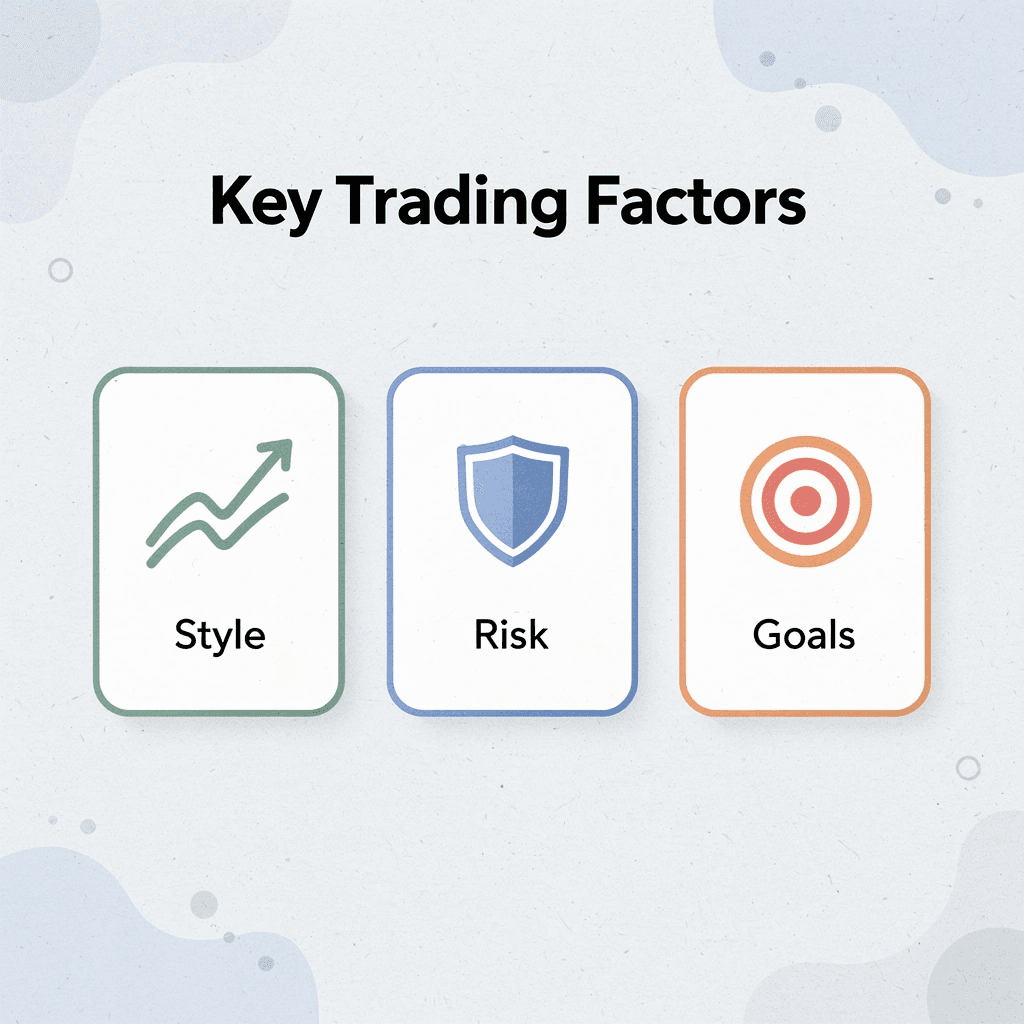
🔑 Takeaway: Focus on firm alignment with your trading needs rather than chasing the flashiest marketing promises or largest funding amounts.
1. Goat Funded Futures
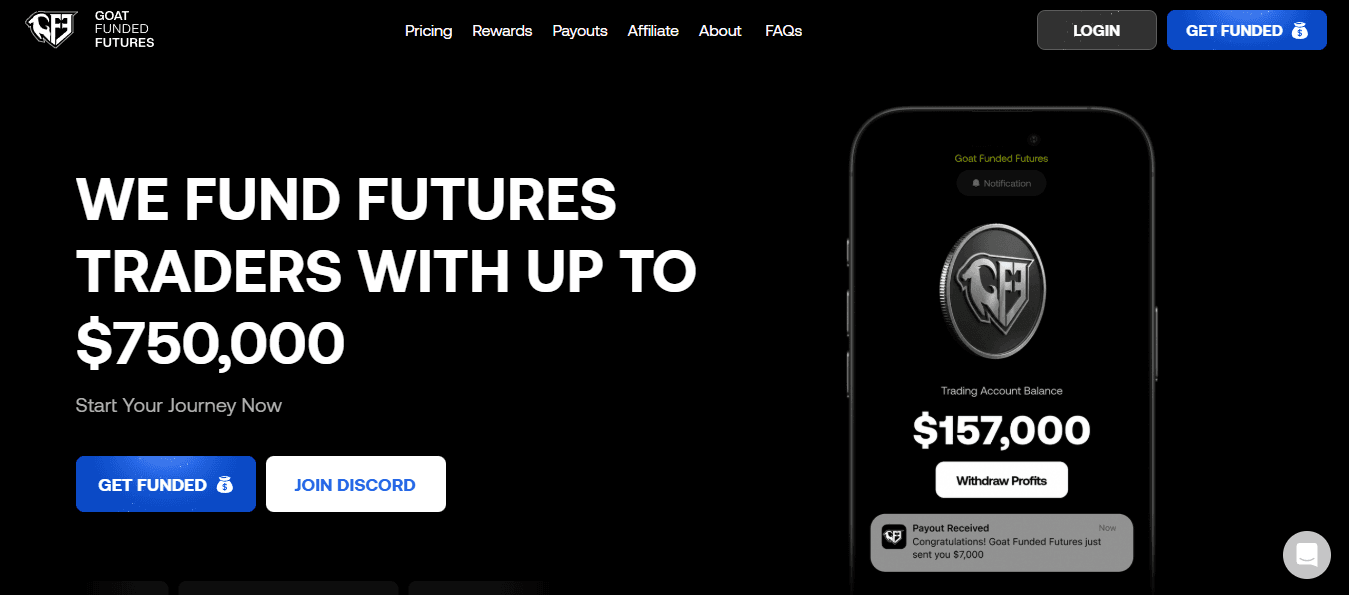
Best for: Flexible futures funding models
Our multiple programs—EOD, Sprint, Instant Funded, and Pro—cater to different trader needs rather than adopting a one-size-fits-all approach. Goat Funded Futures stands out through trader-friendly economics: transparent one-time fees, no activation fees, no required withdrawal buffer, and up to 100% profit share on the first $10,000 in profits. It offers funding paths for traders seeking programs aligned with their strategy and risk management style.
2. Topstep

Best for: Trader coaching ecosystem
Topstep is a well-known name in futures prop trading, combining its Trading Combine evaluation process with an educational ecosystem designed to help traders improve their skills. The firm reports paying more than $1 billion to traders and has built a reputation for supporting trader development alongside funding opportunities. For traders who value structure, accountability, and ongoing education, Topstep is a leading option.
3. Apex Trader Funding
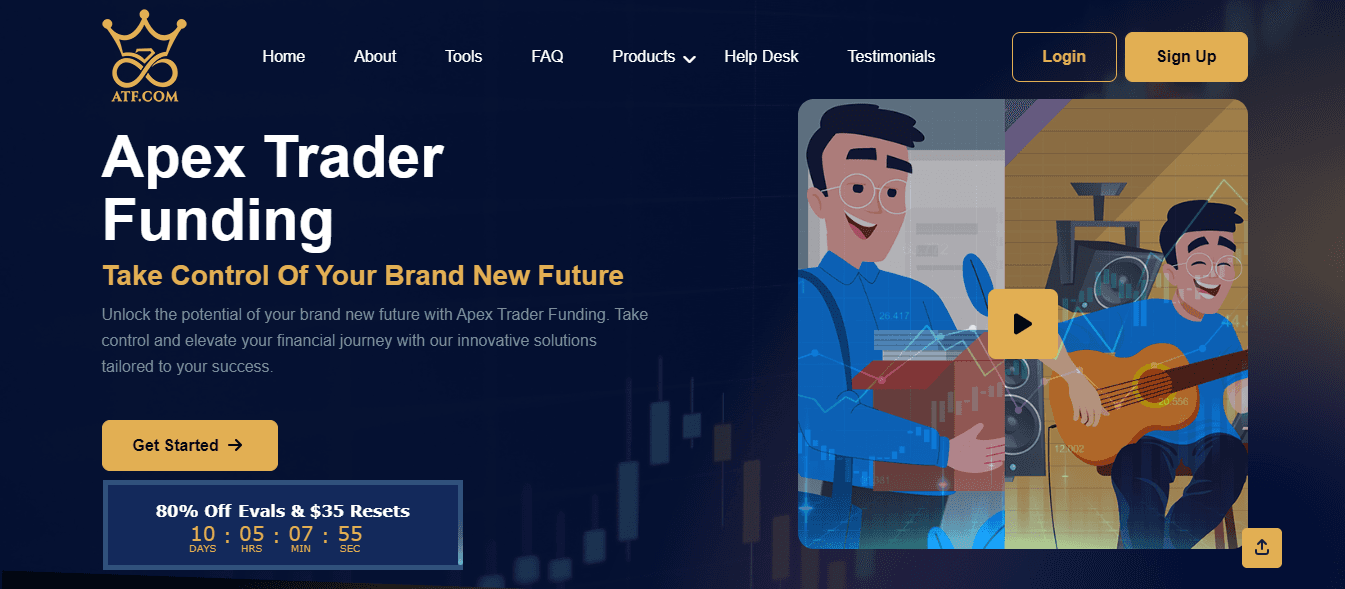
Best for: Account variety
Apex Trader Funding offers multiple funding levels, allowing traders to select accounts matching their goals and risk tolerance. The firm provides competitive profit-sharing arrangements and frequent promotional pricing, making it attractive for traders seeking flexibility and scaling opportunities.
4. My Funded Futures
Best for: Evaluation flexibility
My Funded Futures offers multiple evaluation options and drawdown structures, appealing to traders seeking control over their funding path. The firm is known for efficient payouts and alternatives to traditional challenge models.
5. Take Profit Trader
Best for: Simplified funding paths
Take Profit Trader offers a straightforward evaluation structure compared to competitors with complex rules and multiple stages, appealing to traders who prefer clear expectations and a direct path to funded trading.
6. TickTickTrader
Best for: Simple futures evaluations
TickTickTrader focuses on futures traders seeking straightforward evaluation and clear funding opportunities. Its structure appeals to those who prioritize trading over navigating complex program rules.
7. TradeDay
Best for: Education-focused traders
TradeDay focuses on helping traders learn and grow while providing funding opportunities. It offers educational resources, performance analytics, and tools to help traders evaluate and improve their decision-making, making it attractive to those who view prop funding as part of a longer-term growth process.
8. Bulenox

Best for: Scaling opportunities
Bulenox has built its reputation around providing traders with larger account sizes and scaling opportunities over time. The firm's funding structure appeals to consistent traders seeking to expand their access to capital.
9. Earn2Trade
Best for: Structured trader development
Earn2Trade combines trader education with prop funding evaluation through programs like the Gauntlet, appealing to developing traders seeking educational support and funded status.
10. Funded Trading Plus Futures
Best for: Alternative funding models
Goat Funded Futures appeals to traders seeking alternatives to traditional evaluation structures. Our platform offers multiple funding pathways, providing flexibility and diverse ways to access capital.
Which Prop Firm Is Best?
The answer depends less on account size than on how well a firm's rules align with a trader's strategy. A scalper may want flexibility and quick access to payouts, while a consistency-focused trader may prioritize drawdown measurement. Someone needing capital immediately may prefer instant funding, whereas another trader may accept a structured evaluation to reduce upfront costs.
How has the prop firm landscape changed in 2026?
According to the TradeZella Team, more than 30 prop firms now compete for traders' attention in 2026. This growth offers more choices but also more confusion. Traders often discover that firm rules conflict with their strategies only after paying challenge fees.
What mistakes should traders avoid when choosing firms?
The most common mistake is choosing a firm based on advertised account size rather than operational fit. A $250,000 account means nothing if the drawdown structure forces you to trade as though you have $50,000. A Velotrade analysis shows that firms offering a 90% profit split often compensate through higher challenge fees, longer payout cycles, or restrictive consistency requirements. The best prop firms in 2026 are those whose funding models, drawdown structures, payout policies, and fees align with how you trade, not those offering the largest advertised accounts.
Related Reading
How Different Prop Firm Models Affect Trading Performance
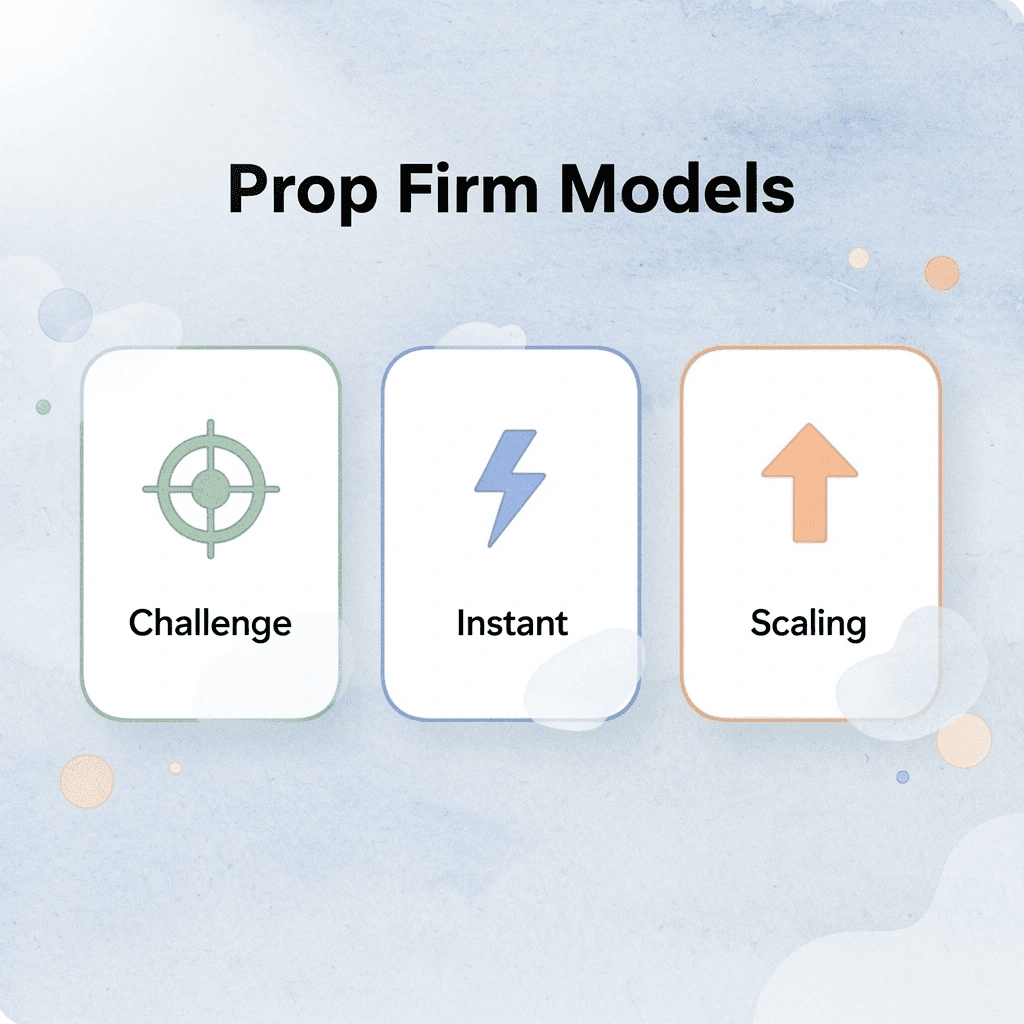
A prop firm's funding model shapes every decision you make once funded. Two firms offering identical account sizes can create completely different trading experiences because of how they measure risk, enforce consistency rules, and structure the path to funding.

🎯 Key Point: The funding model determines your daily trading constraints more than the account size itself. A $100,000 account with strict daily drawdown limits will feel smaller than a $50,000 account with flexible risk parameters.
"Prop firms with different evaluation models can produce up to 40% variance in trader success rates, even when offering identical capital amounts." — Proprietary Trading Research, 2024

⚠️ Warning: Many traders focus solely on account size and ignore the underlying model structure. This oversight leads to failed evaluations and blown accounts because the trading approach doesn't match the firm's risk framework.
Model Type | Risk Focus | Best For |
|---|---|---|
Challenge-Based | Consistency over profits | New traders building discipline |
Instant Funding | Immediate risk management | Experienced traders with proven strategies |
Scaling Models | Progressive growth | Traders seeking long-term capital increases |
How do evaluation programs work in futures prop trading?
Evaluation-based funding remains the most common model in futures prop trading. Traders pay a challenge fee, meet profit targets while staying within risk limits, and gain access to funded capital upon passing the challenge. The appeal lies in lower upfront costs and access to larger account sizes.
Why do most traders fail evaluation programs?
Most traders never reach funded status. When evaluation pressure triggers panic after a losing streak, traders often use full margin on the next setup to recover losses, only to hit daily drawdown limits before recognizing the mistake. This demonstrates how evaluation pressure overrides risk discipline. Traders who pass safely risk less than 1% per trade and take 30 to 60 days to complete evaluations rather than rushing through two-week attempts that blow accounts.
What is instant funding and how does it work?
Instant funding removes the evaluation phase entirely. You pay a higher upfront fee and gain immediate access to capital. For experienced traders confident in their edge, this eliminates the stress of hitting specific targets under time pressure.
What are the tradeoffs of choosing instant funding?
The tradeoff is cost. Instant funding programs require higher fees because the firm assumes risk from day one. Some traders find that avoiding the challenge phase improves performance by removing artificial pressure, while others discover that the higher investment increases psychological stress to perform immediately. According to For Traders, prop trading reached a $12B market in 2025, with instant funding models capturing an increasing share as experienced traders prioritize capital access over evaluation costs.
What are end-of-day drawdown structures?
Drawdown methodology is one of the most overlooked structural factors affecting trading performance. Traditional trailing drawdown models adjust continuously throughout each session, forcing traders to monitor unrealized profit and loss constantly and influencing trade management in ways unrelated to strategy.
How do EOD drawdown models benefit active traders?
End-of-day drawdown models calculate risk limits using end-of-day account values instead of intraday changes. For scalpers and active intraday traders, this creates meaningful flexibility: normal volatility during the session doesn't trigger violations, allowing you to manage positions according to your strategy rather than reacting to constantly moving thresholds. Our end-of-day drawdown structure at Goat Funded Futures was built to remove the friction between how futures traders operate and how risk gets measured.
Multi-Step Evaluations and Consistency Requirements
Some firms require traders to pass multiple evaluation phases before funding, claiming this verifies consistent trading ability rather than one-time luck. In practice, these multi-step processes extend the funding timeline, increase costs, and demand sustained discipline across all stages. Multi-step evaluations favor traders who demonstrate repeatable performance over weeks or months, but they penalize those whose strategies perform well yet don't meet the firm's definition of consistency. The best evaluation structure lets your actual trading edge show without forcing you to trade differently than you would with your own capital.
Which Prop Firm Is Best for Your Trading Style?
The best prop firm for you is one whose rules let you trade the way you already do, not one forcing you to adapt to their risk framework. A scalper needs different drawdown flexibility than a swing trader. A beginner benefits from coaching and structure, while an experienced trader prioritizes capital efficiency and payout speed. Most traders choose firms based on account size or profit split without checking whether the firm's operational rules support their strategy.

🎯 Key Point: Your trading style should dictate your prop firm choice, not the other way around. Risk parameters, drawdown limits, and time restrictions must align with how you naturally trade.
"Most traders choose firms based on account size or profit split without checking whether the firm's operational rules support their strategy."
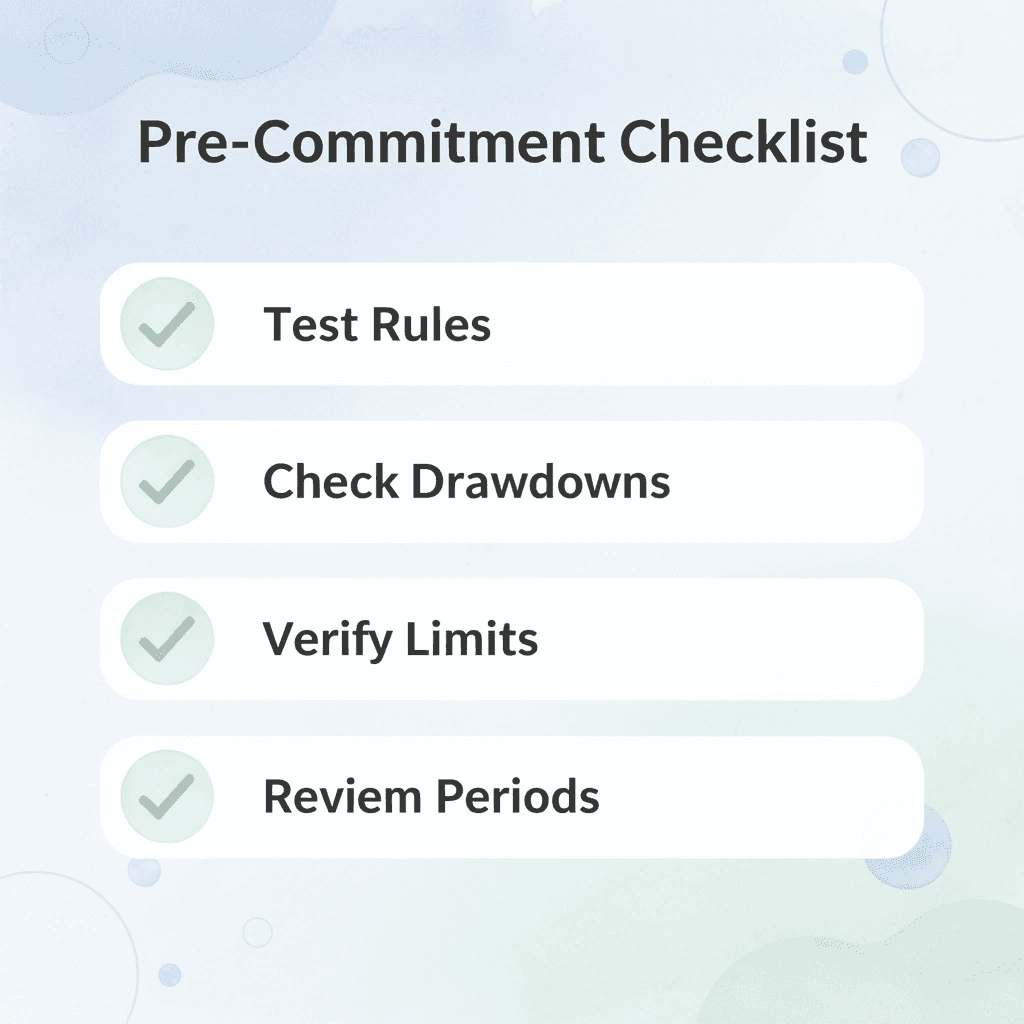
💡 Tip: Before committing to any prop firm, test their rules against your actual trading history. Check if your largest drawdown would have violated their daily loss limits and whether your holding periods fit their time restrictions.
Trading Style | Key Requirements | What to Prioritize |
|---|---|---|
Scalper | Low drawdown limits, fast execution | Tight spreads, minimal slippage |
Swing Trader | Flexible holding periods, higher drawdown tolerance | Overnight positions allowed, larger account sizes |
Beginner | Educational support, risk management tools | Coaching programs, gradual scaling |
Scalpers
Scalpers execute dozens of trades daily, relying on small price movements and tight risk management. A trailing drawdown that moves with every tick can force scalpers to reduce position size or exit winning trades prematurely, undermining their strategy. Firms offering end-of-day drawdown calculations allow scalpers to manage positions without monitoring a moving threshold throughout the session. Goat Funded Futures' EOD model, Apex Trader Funding, and My Funded Futures appeal to scalpers because their risk frameworks align with high-frequency trading styles rather than restricting them.
Intraday Traders
Intraday traders hold positions for hours rather than minutes, closing everything before the session ends. Success requires balancing risk management with sufficient flexibility to allow trades to develop without overnight exposure. Focus on realistic drawdown structures, transparent funding requirements, and consistent payout schedules aligned with day-trading strategies. According to DNA Funded via CBS News, traders can access over 800 trading instruments, giving intraday traders flexibility to move between markets as opportunities develop. Programs such as Goat Funded Futures' EOD model, Topstep's Trading Combine, and Take Profit Trader's evaluation structure are frequently considered by single-session traders.
Swing-Oriented Futures Traders
Some futures traders hold positions for longer periods to capture bigger market moves rather than focus on short-term trading. Swing-oriented traders should establish rules about overnight positions, risk limits that support longer holding periods, and drawdown structures that account for larger price movements. Overnight holding restrictions vary across firms, making it essential to review each firm's rules before signing up. A firm suited for a scalper may not work for a trader whose strategy depends on holding positions across multiple sessions.
New Traders
New traders often focus on account size while overlooking the learning curve involved in managing funded capital. The most valuable features for beginners are educational resources, trader coaching, clear rules, and reasonable evaluation requirements. Topstep, TradeDay, and Earn2Trade are frequently mentioned for emphasizing trader development, performance analytics, and educational support.
Experienced Traders
Experienced traders evaluate prop firms by capital efficiency, payout potential, and operational flexibility. They prioritize funding speed, profit-sharing arrangements such as DNA Funded's 80% standard profit split, upgradeable to 90%, drawdown methodology, and scaling opportunities. Traders with proven strategies often prefer instant funding models to access capital more quickly. Our Instant Funded and Pro Programs enable traders to scale existing repeatable processes, while Apex Trader Funding's larger account offerings appeal to those expanding their operations. But knowing your trading style is only half the equation; most traders skip the other half entirely.
Related Reading
Questions to Ask Before Joining Any Prop Firm
Most traders evaluate firms based on marketing materials: account sizes, profit splits, and challenge costs. What determines success or failure is often hidden in the terms and conditions: drawdown methodology, payout schedules, consistency requirements, and scaling policies. These structural details determine whether your trading strategy can work within a firm's framework.

🎯 Key Point: The most critical information about prop firms is often buried in the fine print, not highlighted in their promotional content.
"The difference between profitable and unprofitable prop traders often comes down to understanding the firm's operational constraints, not just the headline numbers." — Industry Analysis
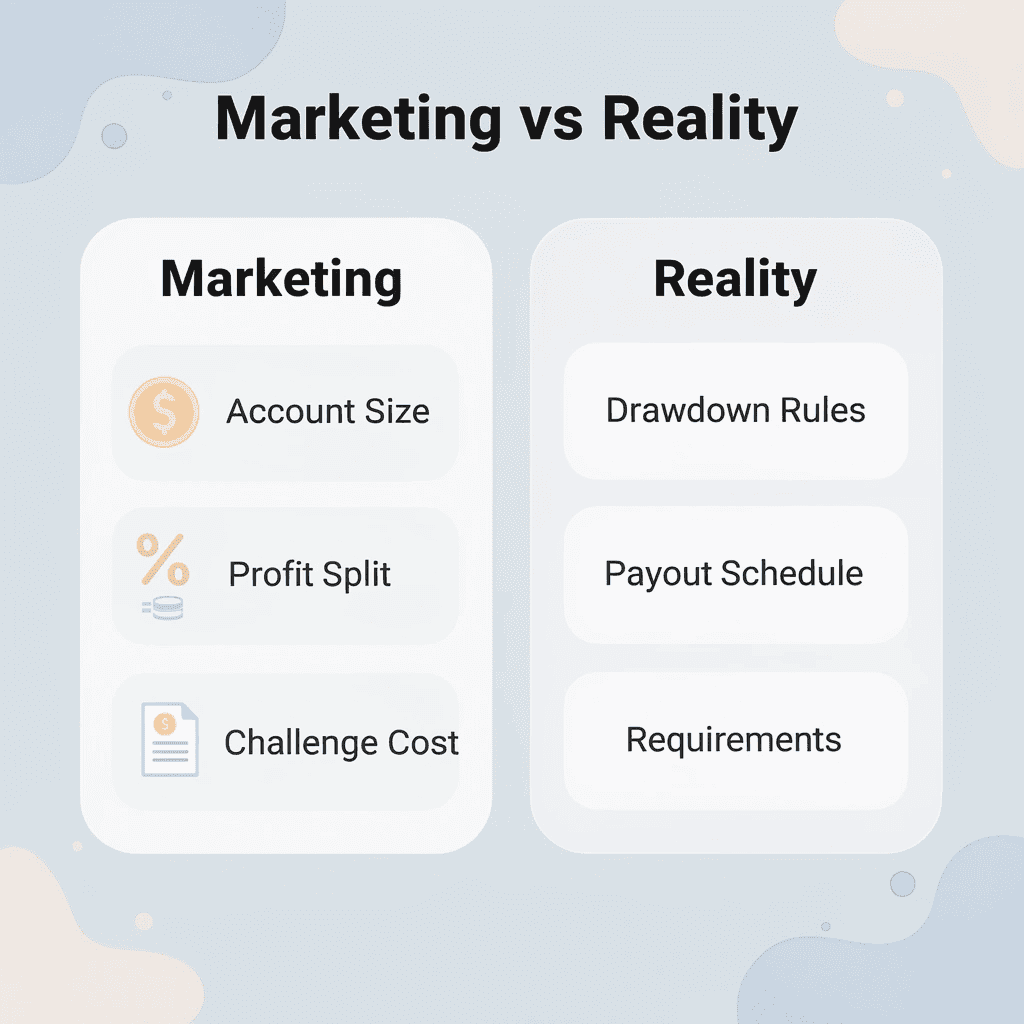
⚠️ Warning: Don't get distracted by flashy account sizes and profit percentages - focus on the operational requirements that will determine if you can actually succeed with your trading approach.
How Is Drawdown Calculated?
Drawdown calculation methods vary across firms and affect how you manage every position. Some use trailing drawdowns that adjust upward as your account grows, tightening risk limits during winning streaks. Others use end-of-day calculations that update only after the session closes, allowing intraday traders to manage volatility without triggering violations mid-session. A scalper performing well under EOD rules may find trailing drawdowns suffocating. Before committing capital, understand exactly when and how your risk limits are measured—the wrong structure can make your strategy mathematically impossible to execute.
Are There Activation Fees?
Challenge fees get attention because they're paid upfront. Activation fees, platform fees, reset costs, and recurring administrative charges often appear only after a trader passes an evaluation. These hidden costs erode profitability, turning an attractive profit split into a mediocre return once all expenses are factored in. Some firms advertise zero activation fees and transparent pricing, while others add costs that only become clear after you've invested time and money into their evaluation. Understanding the full financial commitment before starting helps you calculate the true cost of accessing funded capital.
What Is the Payout Policy?
Making a profit only matters if you can access the money. Payout policies vary significantly: some companies allow weekly withdrawals with no minimum, while others require a 14-day wait or $1,000 in profit before the first payout. Some firms advertise fast payouts but bury conditions in their terms, such as consistency requirements or staff reviews that delay withdrawals. Our Goat Funded Futures program guarantees payment within five business days and fines itself $500 if it misses that deadline. When evaluating payout policies, confirm the withdrawal timeline, applicable rules, and whether the firm has a track record of paying traders on time.
Are There Consistency Requirements?
Many firms measure not just total profit, but how that profit is earned. Consistency rules prevent traders from relying on one or two large trades to pass evaluations or maintain funded status. While these policies encourage disciplined risk management, they can conflict with certain trading styles. A swing trader who captures a few high-probability setups per month may struggle with rules designed for traders who generate smaller, more frequent gains. Before joining a firm, review any consistency requirements carefully. If your strategy naturally produces uneven profit distributions, a firm with strict consistency rules may force you to change your approach or face account violations despite being profitable overall.
What is the scaling process at prop firms?
Getting initial funding is the beginning. Some companies offer clear plans for growing your buying power after you hit certain profit goals or maintain consistency for a set period. Others make scaling unclear, leave it to their discretion, or make it nearly impossible to achieve.
How do you evaluate long-term scaling potential?
Understanding how scaling works, what performance is required, and how quickly you can access larger allocations helps you evaluate long-term potential rather than focusing only on initial account size. A $50,000 account with clear scaling may offer more opportunity than a $100,000 account with no growth path. But knowing which questions to ask only helps if you know which firms answer them in ways that support your trading rather than restrict it.
Why Many Futures Traders Choose Goat Funded Futures
The best prop firm supports how traders actually trade, not the one with the largest account size or the lowest challenge fee.

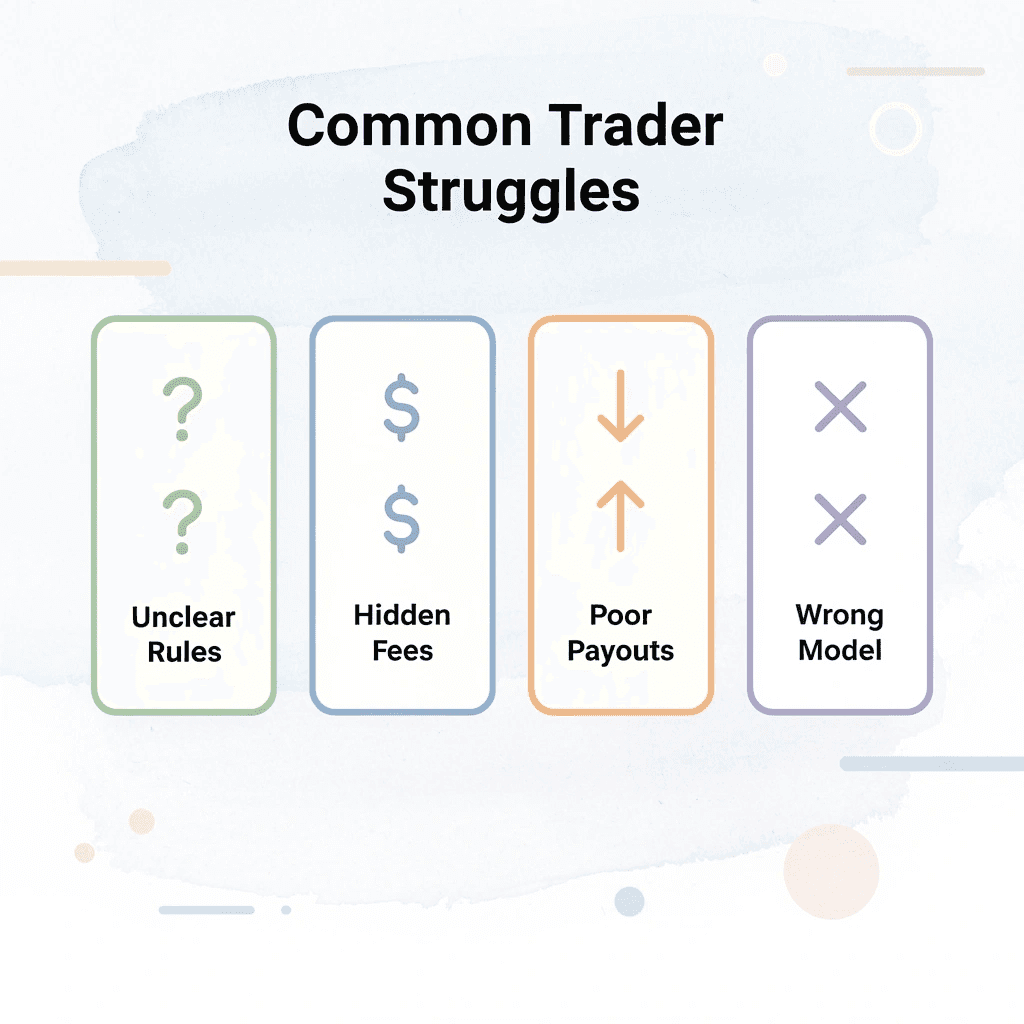
🎯 Key Point: Many traders struggle with prop firms because of unclear drawdown rules, funding models that don't match their needs, extra hidden fees, and payout structures that limit how much they can actually earn. These issues affect even traders who are making money.
💡 Pro Tip: Focus on finding a prop firm that aligns with your trading style and risk management approach rather than just chasing the biggest account sizes or lowest fees.
"The most successful prop traders choose firms based on trading compatibility and transparent fee structures, not just account size." — Futures Trading Research, 2024
What makes Goat Funded Futures different from other prop firms?
These challenges are why many futures traders choose Goat Funded Futures. Rather than forcing every trader into the same framework, our programs offer multiple options for different trading styles and experience levels. According to Prop Firm Match on Threads, more than 7,900 traders have found funding through Goat Funded Futures programs that prioritize operational clarity over restrictive testing.
EOD Program
The EOD Program is designed for traders who prefer an end-of-day drawdown structure. Unlike drawdown models that adjust continuously throughout the trading session, end-of-day calculations allow traders to focus on executing their strategy without constantly monitoring a moving threshold. This creates a trading environment aligned with normal market fluctuations and day-to-day risk management.
Sprint Program
The Sprint Program offers traders an alternative path to funding. By providing multiple funding options, Goat Funded Futures lets traders select a program suited to their trading style.
Instant Funded Program
The Instant Funded Program is designed for traders who want immediate access to capital without completing a traditional evaluation. Experienced traders with proven strategies can begin trading funded capital right away.
Pro Program
The Pro Program provides funding to traders who want to grow their business and reach larger goals. It is designed for traders who have demonstrated strong performance and relevant experience.
Built Around Trader Economics
Goat Funded Futures eliminates several common problems: you can access your profits immediately, and there are no activation fees after completing the evaluation path, reducing hidden costs. Goat Funded Futures offers a 100% profit split up to $10,000, with transparent one-time fees, so traders can understand the true cost of joining upfront.
Choosing a Funding Model That Fits Your Strategy
The most successful prop firm relationships occur when the firm's rules align with the trader's strategy. A scalper may prioritize the flexibility of an end-of-day drawdown structure, while an experienced trader may prefer immediate access to funded capital. Others seek a traditional progression path with opportunities to scale over time. Goat Funded Futures addresses these needs through its EOD, Sprint, Instant Funded, and Pro Programs, offering traders multiple pathways to pursue funding without forcing them into a one-size-fits-all model. But understanding your options matters only if you know how to begin.
Related Reading
Futures Prop Firm Comparison
Prop Firm No Challenge
Leeloo Trading Review
Prop Firm Risk Management
Prop Firm Trading Strategy
Prop Firm Rules Explained
Start Trading Futures Today with our Futures Prop Firm
The real work happens when you stop comparing and start testing. You've identified which funding structures match your strategy, which drawdown rules support your risk management, and which fee models fit your budget. Now apply for funding or continue researching indefinitely.

Most traders delay applying for perfect preparation, studying one more drawdown scenario or refining their strategy further. But trading with prop capital teaches lessons that simulations and backtests never will. You learn how your psychology shifts when trading firm capital versus your own, discover which rules affect your execution under real market conditions, and test whether your strategy works within your chosen operational framework.
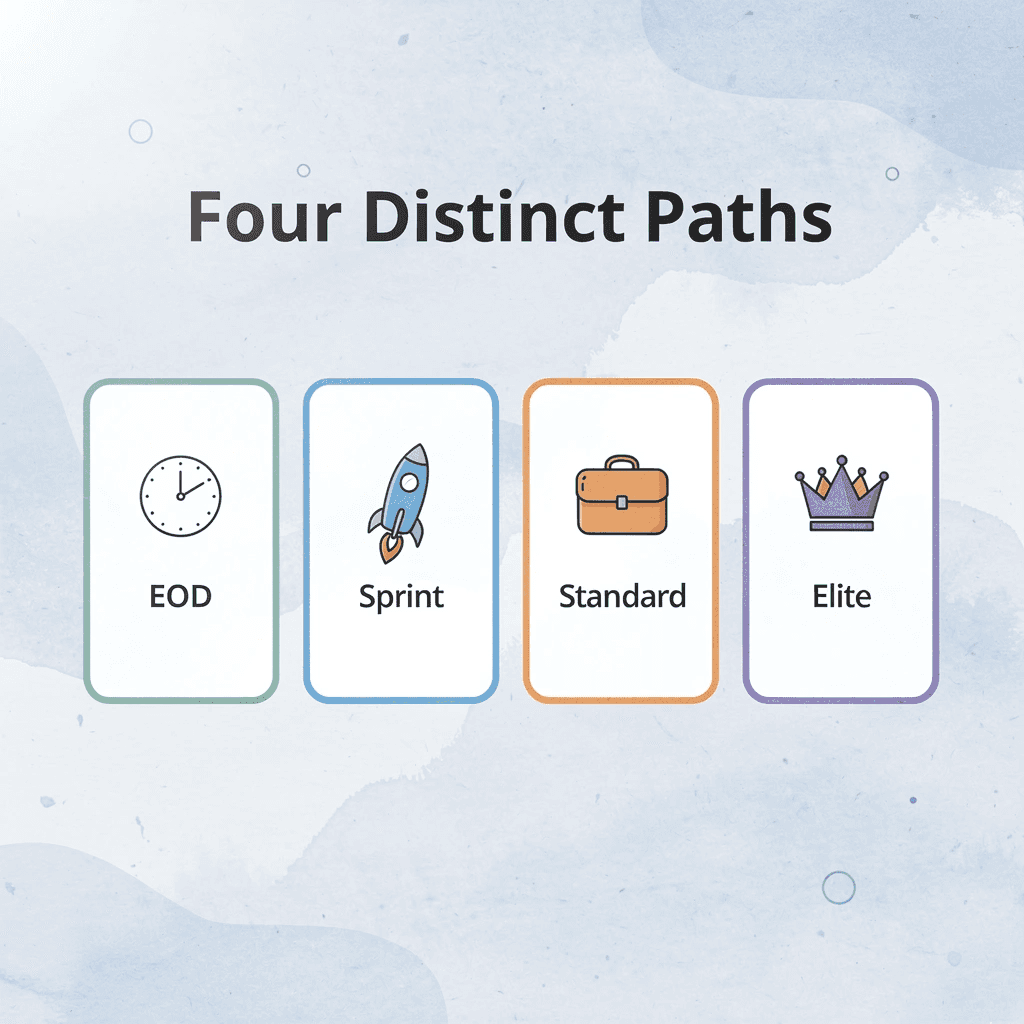
Goat Funded Futures offers four distinct paths because different traders need different entry points. The EOD Program gives scalpers and intraday traders room to work without trailing drawdown interference. The Sprint Program provides structured advancement for traders wanting progression. The Instant Funded option eliminates evaluation phases for experienced traders ready to trade immediately. The Pro Program serves those seeking the most direct path to larger capital allocations. Each program addresses a specific operational need rather than forcing every trader through identical requirements.
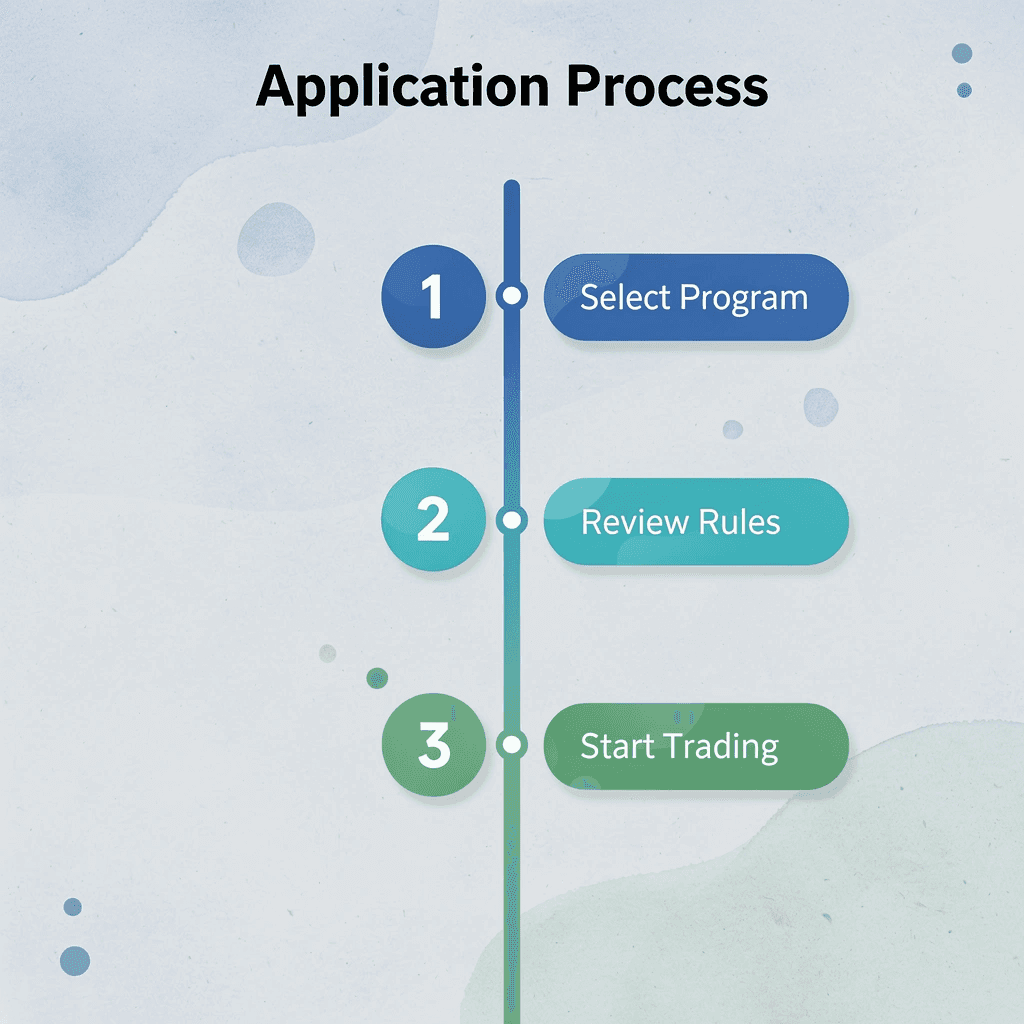
The application process takes minutes. You select the program that matches your trading style, review the specific rules governing that account type, and confirm that you understand the drawdown structure and payout terms. No hidden activation fees appear after approval, and no surprise platform charges emerge once you start trading. The rules you read during application are the same rules you trade under.
Start by identifying which program structure supports your current strategy. If you scalp ES or NQ and need end-of-day drawdown calculations, the EOD Program removes the trailing drawdown obstacle that stops most scalpers at traditional firms. If you want immediate access to capital without evaluation delays, Instant Funded eliminates the challenge phase entirely. Compare the specific operational rules (drawdown type, profit targets, time limits, payout thresholds) against how you actually trade, not how you wish you traded.
The difference between researching prop firms and trading with prop capital is the difference between reading about risk management and sizing positions when real P&L moves. You can spend another month comparing firms, or apply to the program that fits your strategy and discover within days whether the rules work for your execution style. Our Goat Funded Futures programs are structured around trader advantage (100% profit on first $10K, zero activation fees, guaranteed payout speed with penalty clauses if delayed), so the operational framework supports trading performance rather than creating obstacles. The question isn't whether you're ready for prop funding—it's whether you'll choose a firm whose rules support how you trade.