Prop Firm Risk Management: The Skill That Determines Success
Master prop firm risk management strategies that separate profitable traders from failures. Goat Funded Futures reveals the essential skills you need.

Landing a funded account with futures prop firms means nothing if poor risk management destroys it within weeks. Traders who overleveraged positions, ignored stop losses, or misunderstood drawdown limits quickly discover that talent alone doesn't guarantee success. The difference between consistent performers and cautionary tales lies in mastering position sizing, daily loss rules, and capital protection strategies that keep accounts alive long enough to profit.
Successful traders treat risk management as their primary edge, not an afterthought to market analysis. They understand that protecting capital matters more than chasing oversized gains, especially when operating under strict evaluation criteria and drawdown limits. Developing these disciplined habits requires practice in a structured environment, which makes choosing the right futures prop firm essential for long-term trading success.
Table of Contents
Summary
Poor risk management causes 90% of trader failures, according to multiple industry studies, not flawed strategies or weak market analysis. Traders abandon position-sizing rules during winning streaks and violate stop-loss orders when trades move against them, creating account volatility that even profitable setups cannot overcome. The mathematics is unforgiving. A trader who loses 25% of their account needs a 33.3% return just to break even, while a 50% drawdown requires doubling the remaining capital.
Position sizing based on account percentage rather than trade conviction creates mathematical survival advantages that separate sustainable traders from those who flame out. Risking 1% per trade allows survival through 100 consecutive losses, a statistically improbable scenario for traders with any legitimate edge. Risking 10% per trade because of confidence in a setup means that 10 losses can eliminate the account entirely, regardless of how strong previous performance looked.
Daily loss limits function as circuit breakers, preventing compromised judgment from causing further damage during rough sessions. Traders who continue past predetermined loss thresholds typically worsen their situation because frustration has already degraded decision quality. Professional traders often stop before reaching their limits, recognizing that protecting capital today creates an opportunity to trade tomorrow with clarity rather than forcing recovery while emotionally compromised.
Drawdown management reveals how traders handle adversity across changing market conditions, separating lucky evaluation periods from genuine skill. A trader who generates steady gains, experiences a 15% drawdown, then methodically recovers demonstrates the ability to manage losses without abandoning their process. The prop trading industry reached $20 billion globally with over 2,000 firms operating worldwide, and these firms back traders who demonstrate consistency under stress rather than spectacular returns during favorable conditions.
Scaling funded accounts requires maintaining risk discipline as capital grows, even though larger balances create psychological pressure that smaller accounts never trigger. A 2% loss on a $100,000 account costs $2,000 versus $200 on a $10,000 account, and traders who aren't prepared for that emotional shift often start second-guessing their rules exactly when they need them most. The traders who scale consistently rarely produce the flashiest returns; they're the ones who avoid giving back gains and stay within drawdown limits, even when frustrated.
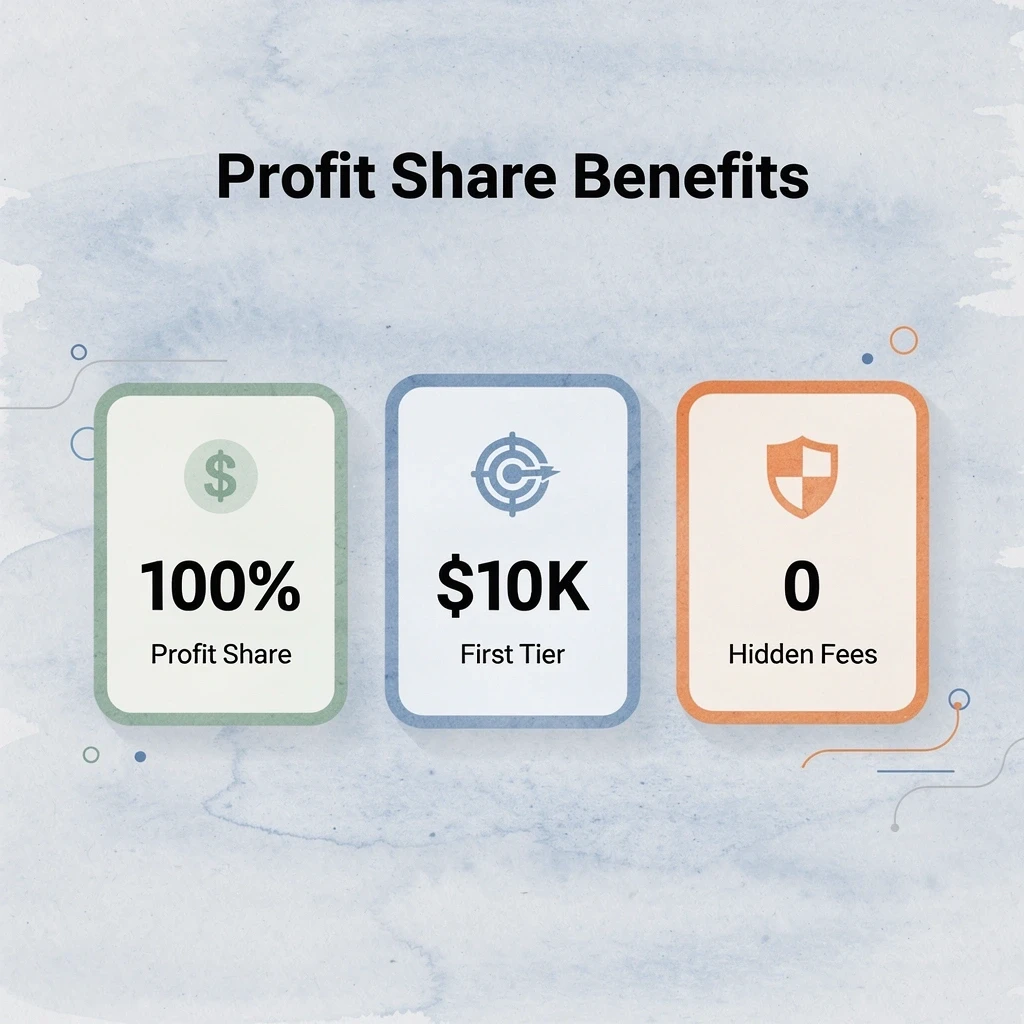
Goat Funded Futures offers end-of-day drawdown calculations, instant funding options, and up to 100% profit share on the first $10,000, which helps traders focus on disciplined execution rather than managing intraday equity surveillance or navigating delayed payouts.
Why Most Traders Struggle With Risk Management
The problem isn't understanding stop losses or position sizing—it's abandoning them when trades move against you or winning streaks tempt larger exposure. Risk management fails when emotion overrides structure.

According to Colibri Trader, 90% of traders fail due to poor risk management, not unprofitable setups. A trader might backtest a strategy showing consistent returns, then watch their live account collapse after doubling position size following three wins or moving their stop-loss mid-trade. The strategy didn't fail. The trader did.
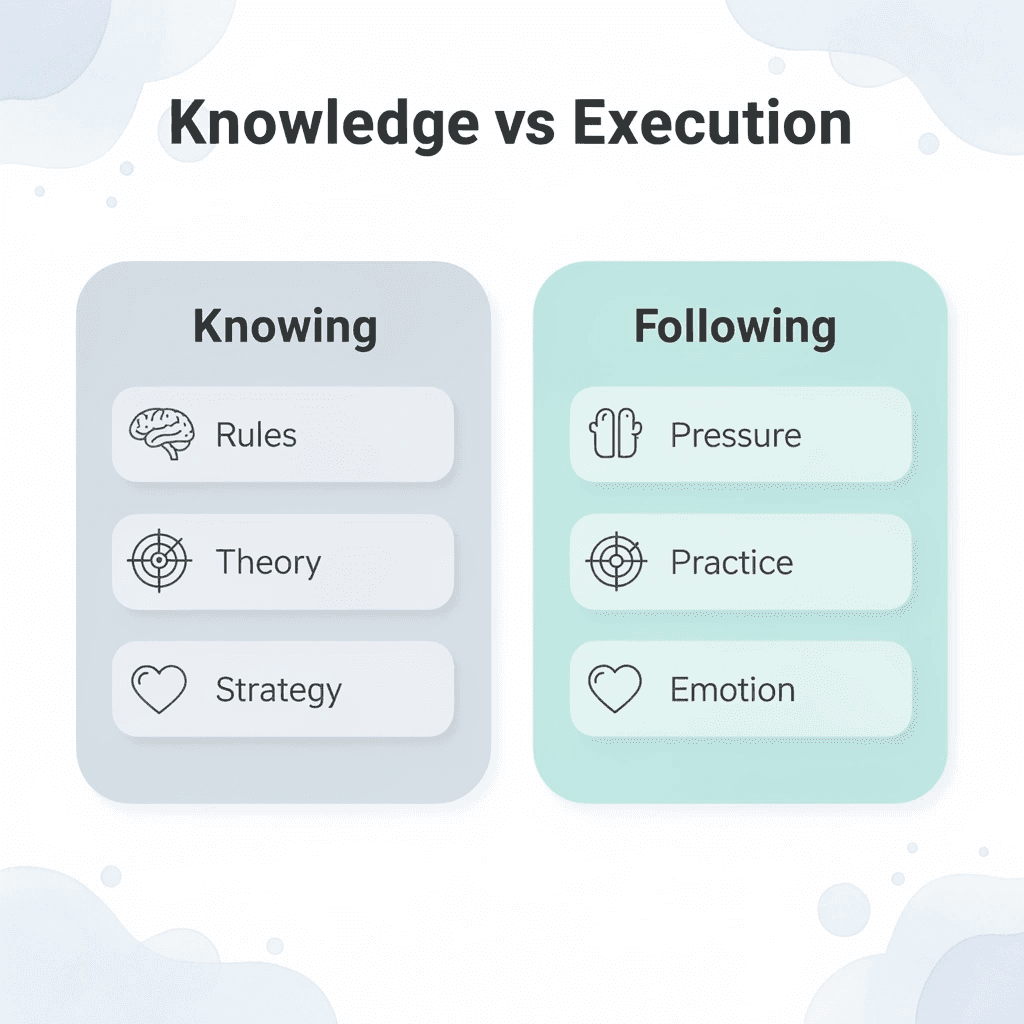
🔑 Key Takeaway: The gap between knowing risk management rules and actually following them under pressure separates successful traders from the 90% who fail.
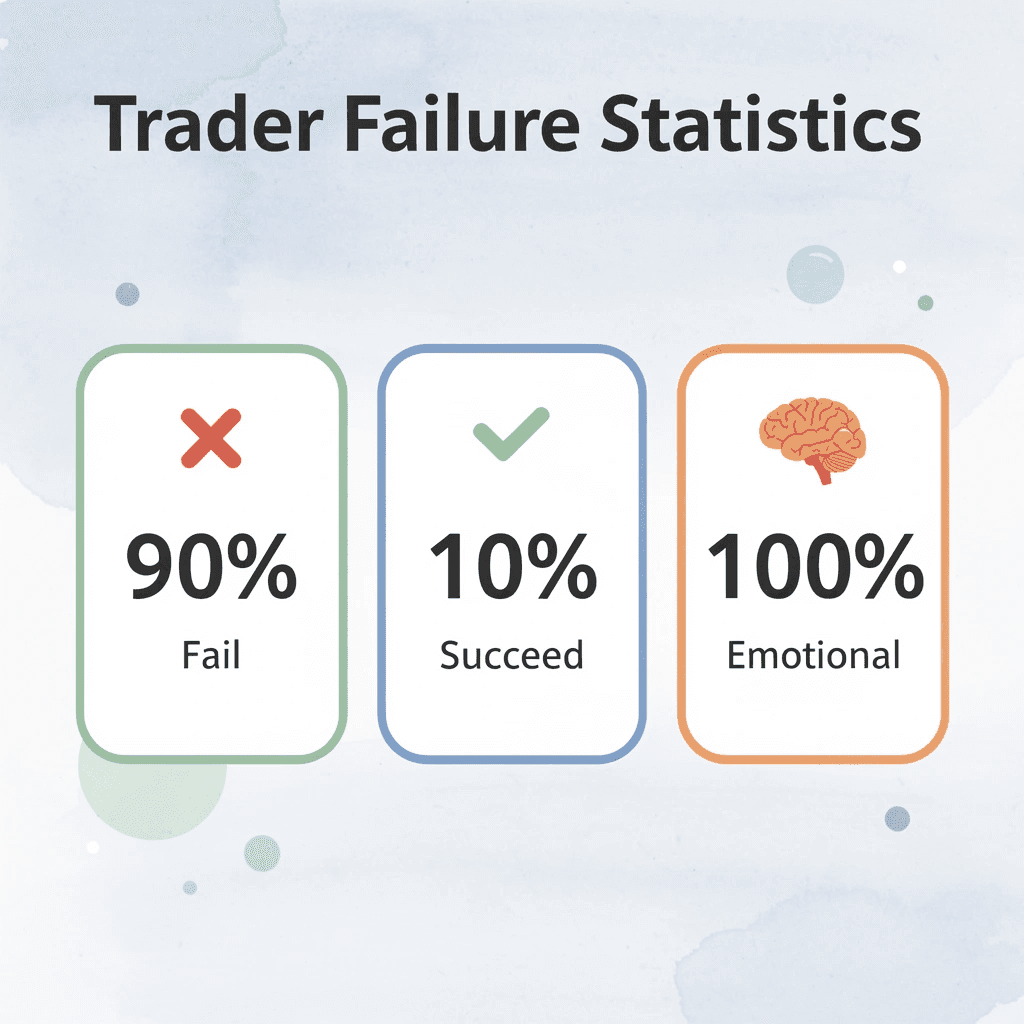
"90% of traders fail due to poor risk management, not unprofitable setups." — Colibri Trader
⚠️ Warning: Even profitable strategies become worthless when traders abandon their predetermined rules during emotional moments in live trading.
The Emotional Override
Fear and frustration can masquerade as logic. "This trade feels different." "I'll give it a little more room." "I can make it back on the next one." These seem reasonable in the moment, but they're emotional decisions.
Why do emotional decisions accelerate account destruction?
A trader who loses 10% of their account needs an 11.1% gain to recover. Lose 25%, and recovery requires a 33.3% return. A 50% drawdown demands a 100% gain to break even. Emotional trading—revenge trading after losses, overleveraging during hot streaks, and inconsistent position sizing based on confidence rather than probability accelerates this decline and creates volatility that even winning strategies cannot overcome.
The Illusion of Strategy Superiority
Many traders believe that finding better entry signals reduces the need for risk management. This is backward. Even a 60% win rate strategy experiences losing streaks. Without proper risk controls, three or four consecutive losses trigger panic, and position size increases to recover quickly, often with catastrophic results.
How do influencer trading styles mislead new traders?
Traders often follow influencers' aggressive styles after seeing flashy profit screenshots, assuming the same trades will produce identical results. They don't see the money cushion absorbing drawdowns or income from course sales offsetting losses.
A 50% drawdown over a few trades wipes out months of progress when capital is limited and there is no safety net. The strategy might work for someone with different capital reserves, but without adapting the risk framework to their situation, new traders risk immediate failure.
Structure Versus Survival
The traders who last aren't necessarily the ones with the highest win rates. They're the ones who decide their risk before entering a trade and stick to it regardless of what follows.
They know their biggest loss per trade, their total portfolio exposure, and exactly when they'll exit—both for gains and losses. When the rules are clear, decisions become automatic rather than emotional.
How do prop firms structure their evaluation programs?
Most prop firms, including Goat Funded Futures, structure their evaluation programs around this principle by setting maximum drawdown limits, daily loss thresholds, and position-size requirements that require traders to operate within a risk framework.
Traders who pass these evaluations understand that preserving capital today creates the opportunity to trade tomorrow. The firm backs traders who demonstrate consistency, not recklessness, because sustainable profitability comes from managing downside risk, not from maximizing upside potential on every trade.
Why is survival the foundation of trading success?
Survival isn't a secondary consideration in trading; it's the foundation that determines whether you'll be around long enough to benefit from your edge.
But knowing you need structure and putting it into practice when things get stressful are two different challenges.
What Prop Firm Risk Management Actually Means
Prop firm risk management is the system that determines whether you can protect your money while generating returns. It encompasses controlling drawdowns, sizing positions consistently, managing daily losses, and maintaining discipline with each decision involving the firm's money.

🎯 Key Point: Risk management isn't just about avoiding losses—it's about proving you can generate profits without jeopardizing the entire account through reckless trading decisions.
This difference matters because prop firms fund traders who can make money without putting the account at risk. A trader earning $5,000 through careless position sizing differs from one earning the same amount through controlled risk exposure, despite identical P&L results.
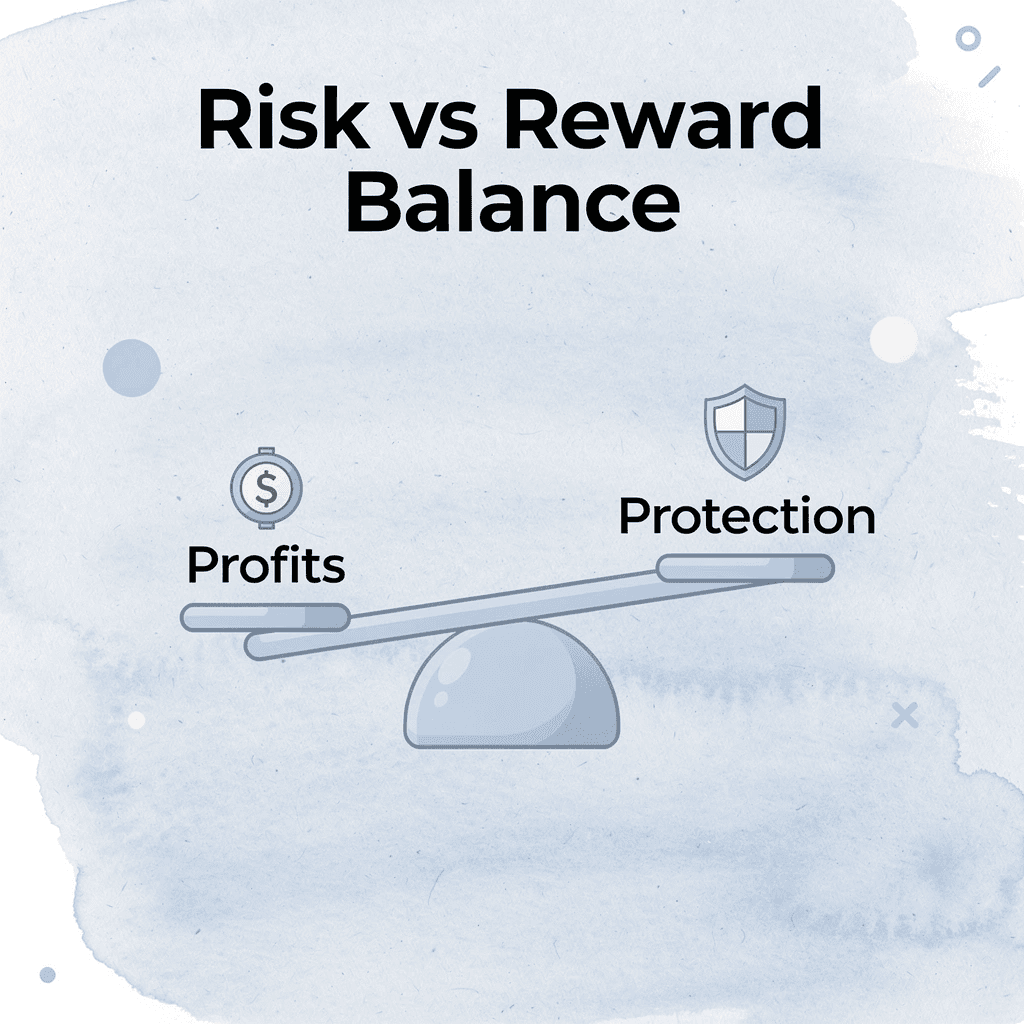
"Prop firms don't just want profitable traders—they want consistently profitable traders who can protect capital while generating returns." — Industry Analysis, 2024
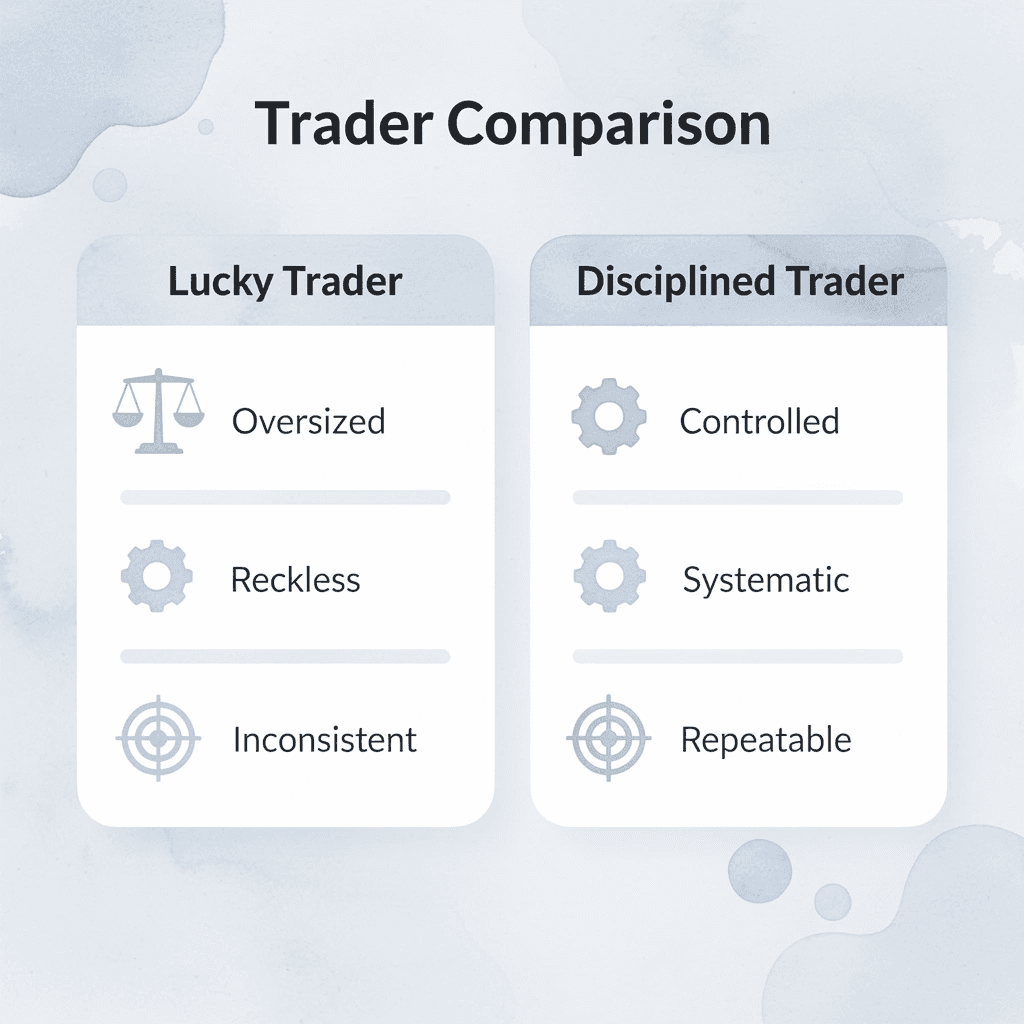
⚠️ Warning: Two traders with identical profit numbers can have completely different risk profiles—and prop firms will always choose the trader who achieved results through disciplined risk management over one who got lucky with oversized positions.
Why does position sizing determine your real exposure?
Two traders can take the exact same setup at the same moment. One risks 0.5% of the account. The other risks 5%. The second trader isn't being aggressive—they're being careless, because ten consecutive losses eliminate half their capital.
How does consistent position sizing remove emotion from trading?
Using the same position size for every trade removes emotion from trade execution. You're not deciding how much to risk based on confidence levels or a desire to recover yesterday's losses. You're following a predetermined plan that protects your account during inevitable losing trades.
According to ACY Securities, most professional risk management plans recommend 1-2% risk per trade. This threshold separates sustainable trading from account depletion.
Why do daily loss limits prevent escalating damage?
Maximum daily loss limits prevent you from trying to fix a bad morning by trading through lunch, then fixing a bad afternoon by trading into the close: the pattern every struggling trader has repeated.
How does stepping away protect your mental state?
A trader who shared their journey since 2016 emphasized the importance of writing down every trade, including emotions and thoughts, to prevent overtrading and revenge trading. Stepping away when you're down 2% for the day isn't admitting defeat; it's recognizing that your mental state has shifted from executing a plan to recovering from pain.
Daily loss limits force the pause most traders won't give themselves voluntarily, creating a circuit breaker that prevents one rough session from becoming account-ending.
How does drawdown reveal trader behavior under stress?
Prop firms track drawdowns because they reveal how you act under pressure. A trader who makes steady gains, experiences a 15% drawdown, and carefully recovers demonstrates they can handle losses without abandoning their plan.
Compare that to a trader who jumps between 30% gains and 25% losses. Same average result on paper, but with different risk levels. The second trader cannot control their downside risk, making their performance unpredictable under stress.
Why do prop firms focus on discipline over luck?
Many prop firms discover that evaluation periods capture lucky streaks rather than genuine skill. Drawdown management separates the two: luck eventually runs out, but discipline doesn't.
Platforms like Goat Funded Futures structure evaluation criteria around this principle: we're not looking for traders who can win, but traders who can survive, adapt, and maintain performance across changing market conditions. Our 100% profit split on the first $10K and guaranteed 2-day payouts matter only if you're still trading six months from now.
But knowing these principles and applying them when you're three trades into a losing streak are completely different challenges.
Related Reading
7 Biggest Risk Management Mistakes Traders Make
Most account failures stem from seven specific risk management mistakes that compound over time, eroding capital faster than any advantage can rebuild it. These critical errors create a compounding effect that accelerates losses and destroys trading careers before traders recognise what's happening.
⚠️ Warning: The biggest danger isn't making one of these mistakes—it's making multiple mistakes simultaneously, which creates a downward spiral that's extremely difficult to recover from.

"Risk management is the most important aspect of trading. Without it, even the best strategy will eventually lead to account destruction." — Professional Trading Institute, 2023
Risk Management Mistake | Impact Level | Recovery Difficulty |
|---|---|---|
Overleveraging positions | Severe | Very Hard |
No stop-loss discipline | High | Moderate |
Position sizing errors | High | Moderate |
Emotional decision making | Severe | Hard |
Ignoring correlation risk | Moderate | Easy |
Poor timing entries | Moderate | Easy |
Inadequate diversification | High | Moderate |

🔑 Takeaway: Understanding these seven mistakes is only the first step—developing systematic processes to avoid them is what separates successful traders from those who blow up their accounts within the first year.
1. Risking Too Much on a Single Trade
Position sizing determines how long you can keep trading, more than how good your strategy is. A trader risking 8% per trade can lose half their account in nine consecutive losses. That same trader, risking 1% per trade, would need seventy consecutive losses to lose the same amount.
Confidence makes it seem as though certain trades deserve larger positions. The market doesn't care how sure you are. Oversized positions turn normal losing streaks into account-ending events before your strategy has enough trades to prove itself.
2. Moving Stop Losses During Active Trades
Predefined risk only works when enforced. The internal dialogue sounds reasonable: "The market will probably reverse." Sometimes it does. More often than not, a planned $200 loss becomes $600 because hope replaces discipline.
According to Colibri Trader, 90% of traders fail due to poor risk management, and moving stops mid-trade represents one of the most common violations. The stop-loss protects you from emotional reasoning that can override strategic thinking.
3. Revenge Trading After Losses
After a $300 loss, traders take setups they would normally reject because reaching breakeven feels more urgent than following their rules. Position sizes increase, selectivity disappears, and one emotional decision triggers several more, each compounding the damage.
Many failed evaluations trace back to a single losing trade that triggered a psychological spiral. The original loss was survivable; the subsequent revenge trades were not. Traders who stop after reaching their daily loss limit protect themselves from this cascade.
4. Ignoring Daily Loss Limits
Daily loss thresholds prevent a single bad day from becoming a disaster.
A trader with a $500 daily loss limit who reaches it will make choices driven by frustration rather than analysis. Continuing to trade past this point rarely leads to recovery; it usually results in larger losses because decision-making quality has deteriorated.
Successful traders often stop before they must, recognizing that protecting capital and returning tomorrow with a clear mind works better than attempting recovery while emotionally upset. The daily limit acts as a circuit breaker, preventing small losses from becoming catastrophic.
5. Scaling Position Size Too Quickly
Short-term success creates dangerous overconfidence.
A trader performs well over ten trades and doubles their position size, assuming they've mastered the market. The next ten trades represent a normal losing streak, but the larger positions erase all previous gains and trigger a drawdown violation. Consistency hasn't been proven; it's been assumed based on an insufficient sample size.
Scaling should follow sustained performance across varied market conditions, not recent wins during favorable conditions. The trader who gradually increases size after demonstrating months of consistency faces far less risk than the trader who doubles down after one good week.
7. Focusing Exclusively on Profit Targets
Most traders focus excessively on profit targets while ignoring loss limits, giving profit goals constant attention, and neglecting risk controls.
A trader focused on making $2,000 today will take unnecessary risks to reach that target. A trader focused on protecting capital stays active long enough to build many profitable days over time. Professional traders determine their downside before their upside: they enter trades knowing exactly what they're risking before considering possible profit. Long-term performance depends more on loss control than profit maximization.
Treating All Market Conditions Identically
Markets don't maintain consistent volatility levels, yet many traders risk the same amounts regardless of conditions.
When volatility is high, price movements become larger and faster. Three contracts in a volatile, news-driven session expose a trader to significantly more risk than the same position in calm conditions: the position size remains constant, but the actual risk multiplies.
Successful traders adjust their approach to match current market behavior, recognizing when conditions require smaller size, wider stops, or greater patience. Flexibility in execution protects against damage from applying static rules to dynamic environments.
Why Small Violations Compound Into Account Failures
One moved stop loss. One oversized trade. One revenge trading session. One day past your loss limit. Individually, each decision seems manageable. Together, they create the drawdown that ends evaluations and eliminates funded accounts.
How do small violations lead to trader failure?
This is why Stokes Trades reports that 90% of traders lose money. The problem isn't strategy quality; it's the accumulation of small risk management mistakes that compound over time until capital protection fails.
Many prop firms build their programs around finding traders who treat risk management as a daily habit rather than as an occasional one. Firms like Goat Funded Futures offer instant funding and 100% profit splits on the first $10K, but these benefits matter only if you're still trading six months from now. Poor risk management wipes out your account before you can withdraw your money.
What separates knowing from doing in risk management?
Consistency is built by avoiding the mistakes that stop you from staying in the game long enough to let your advantage show up across enough trades. Knowing which mistakes to avoid and maintaining discipline during a three-trade losing streak are entirely different challenges.
How Successful Prop Traders Manage Risk Differently
Successful traders manage risk to make survival inevitable. They treat risk management as the foundation of every decision, not an obstacle, protecting capital first and optimizing returns second.

🎯 Key Point: Elite prop traders understand that consistent profitability comes from protecting downside risk before chasing upside potential. This mindset shift separates long-term winners from traders who blow up their accounts.
"The best traders focus on not losing money first, then on making money second. Risk management isn't a constraint—it's the foundation of sustainable trading success." — Professional Trading Research, 2024

⚠️ Warning: Many new traders make the critical mistake of focusing on potential gains while ignoring position sizing and stop-loss discipline. This approach leads to account destruction rather than wealth building.
They Calculate Position Size Based on Account Risk, Not Trade Conviction
When you feel confident about a trade, you might want to risk more money. Professional traders don't. Instead, they decide how much to risk using a fixed percentage of their account balance, usually between 0.5% and 2% per trade, regardless of their confidence level.
This method creates consistent math. If you risk 1% per trade, you can lose 100 trades in a row before depleting your capital. But if you risk 10% per trade because you "know" it will work, ten losses in a row will destroy everything. The math doesn't care how sure you are.
They Use Time-Based Stops, Not Just Price-Based Stops
Most traders think about stop losses only in terms of price levels. Professionals add a second layer: time. If a trade hasn't moved in their favor within a specific timeframe (30 minutes, two hours, or one session), they exit regardless of whether the price hits their stop-loss.
Capital tied up in positions that aren't moving can't be used elsewhere. If your thesis was that momentum would carry the price higher within the first hour, and two hours pass with no movement, your thesis was wrong. Waiting longer only delays the inevitable while preventing you from pursuing better opportunities.
They Separate Trading Capital from Payout Expectations
Many traders calculate their monthly bills, divide by 20 trading days, and conclude they need to make $X per day. This creates pressure that changes their decision-making: forcing trades on slow days and holding losing positions longer to hit targets.
Professional traders do the opposite. They focus on executing their process correctly and let results build over enough trades. According to For Traders, the prop trading industry reached a $12B market in 2025. Firms writing checks aren't looking for traders who hit random daily targets; they're looking for traders who protect capital while maintaining positive expectancy across hundreds of trades.
They Track Risk Across Multiple Positions Simultaneously
Having three positions that each risk 1% sounds safe until you realize all three are long crude oil contracts. If crude drops sharply, you're risking 3% or more because your positions are correlated. One piece of news, one supply report, or one geopolitical event affects all three simultaneously.
What questions should traders ask about portfolio exposure?
Successful traders watch their total portfolio exposure, not individual trade risk. They ask: If this sector moves against me, how many positions will suffer simultaneously? If I'm long equities and short bonds, am I hedged, or am I making a leveraged bet on risk sentiment? This prevents "disciplined" 1% risk per trade from becoming a catastrophic 10% drawdown when everything moves together.
They Reduce Size After Losses, Not After Wins
After winning several times in a row, your instinct might be to trade with more money because you're "hot." After losing money, your instinct might be to trade with more money to recover losses faster. Professional traders do the opposite: they use smaller position sizes after losses and maintain the same size or increase slightly during winning periods.
Why do successful prop firms emphasize scaling into strength?
This connects to decision quality. Research from Best Prop Firms shows that the prop trading industry has grown to $20 billion globally, with over 2,000 firms operating worldwide, 62% of which are based in the United States.
These firms have learned that traders who gradually increase their trades when things are going well and reduce their trades when things are going poorly survive longer than those who try to make back losses quickly or become overconfident after winning trades. Your brain doesn't make better decisions when you're down $2,000 this week. Reducing your trade size acknowledges that reality rather than pretending that discipline alone can overcome poor judgment.
What happens when theory meets real trading pressure?
But knowing these principles and putting them into practice when you're three trades into a losing streak requires something that most educational content completely ignores.
Related Reading
How to Build a Personal Risk Management Plan
Most traders work without a written risk plan, assuming their strategy serves this purpose. A strategy tells you when to buy and sell. A risk plan tells you how much money you could lose if something goes wrong, when to stop trading for the day, and what situations let you trade with more money. Never make these decisions while money is moving.

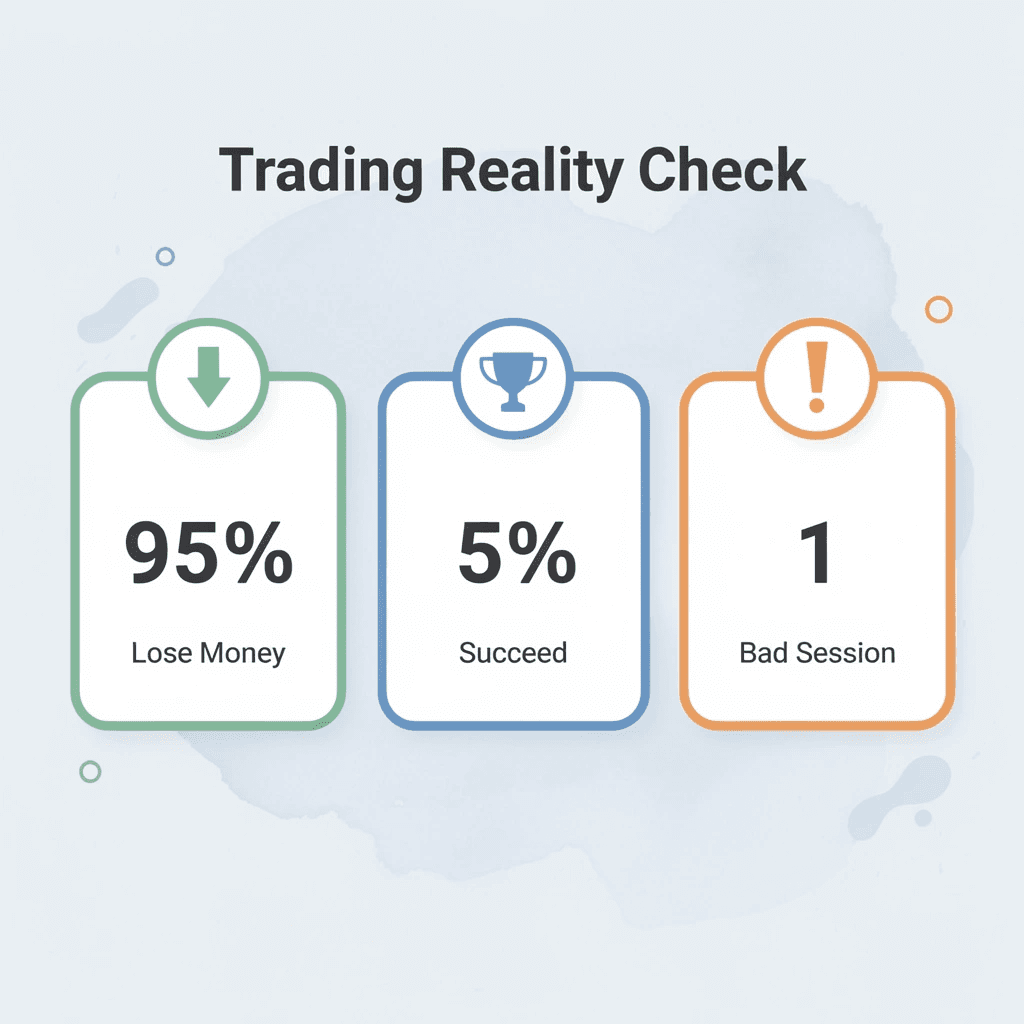
"95% of day traders lose money over time, often due to poor risk management rather than bad market timing." — FINRA Investor Education Foundation, 2019
🎯 Key Point: Your risk management plan is separate from your trading strategy - it's the safety net that protects your capital when trades go against you.
⚠️ Warning: Making risk decisions during active trading leads to emotional choices that can wipe out weeks of profits in a single session.
Define Your Maximum Risk Per Trade
Professional traders think about risk in units before profits. Before entering any position, they know the exact dollar amount they are exposed to. Risk should be decided ahead of time, not based on emotions.
Ask yourself whether you risk roughly the same amount on every trade. If the answer changes based on how confident you feel about a setup, that's a warning sign. Confidence doesn't predict outcomes. Consistency does.
Establish Daily Loss Limits
A daily loss limit stops a bad morning from turning into a career-ending afternoon. Define it before you start trading, not after consecutive losses. Many traders find their biggest losses occur after they should have stopped trading.
A written limit removes the decision from the moment when emotions are strongest, recognizing that your judgment deteriorates under stress.
Create Weekly Drawdown Thresholds
A weekly limit catches gradual performance drops before they worsen. When a trader hits a set weekly loss level, the plan might require smaller position sizes, less frequent trades, or a temporary break.
Firms like Goat Funded Futures build these limits directly into their evaluation structure as guardrails that protect traders from making poor decisions during tough stretches. Clear rules eliminate guesswork about when to slow down.
Develop Position Sizing Rules
Inconsistent position sizing is one of the most common weaknesses among developing traders. Position size often changes based on traders' confidence rather than on set rules: it increases after winning streaks, decreases after losses, and continually shifts the amount of risk taken. A written plan should explain how position size is decided, what reasons justify increasing it, and what situations require decreasing it. Clear rules create stability and make it easier to evaluate performance.
Build a Trade Review Process
Most traders spend more time seeking new strategies than reviewing how well their current ones work. Structured review accelerates improvement by revealing patterns and recurring mistakes. A simple process includes reviewing profitable and losing trades, tracking rule violations, identifying emotional decisions, and evaluating market conditions. Over time, these reviews uncover weaknesses you might not notice otherwise.
But even the best-written plan fails without surviving contact with real trading conditions.
Why Risk Management Determines Whether Traders Scale
Getting funded shows you can handle pressure and perform well under short deadlines. Staying funded demonstrates you can repeat that performance when the market changes, during losing streaks, and under increased pressure. How you manage risk determines your outcome.

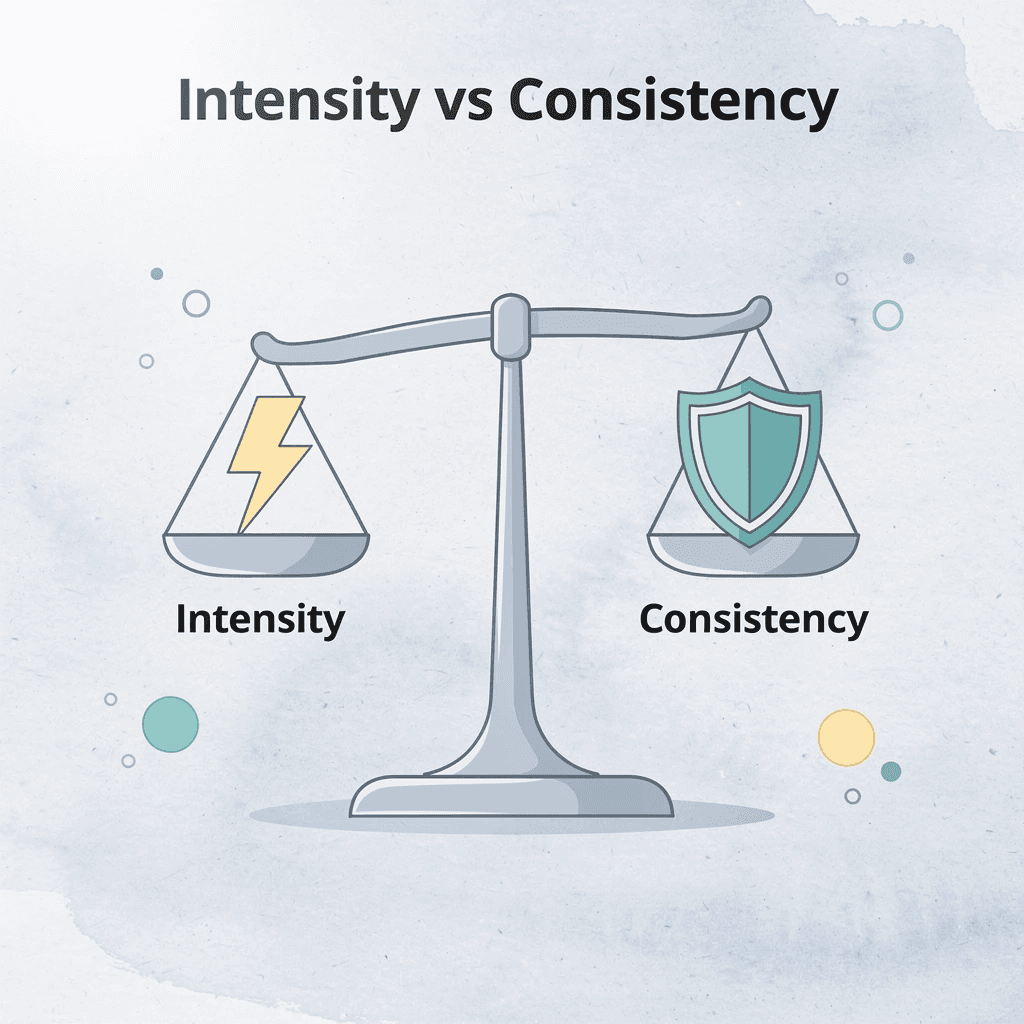
🎯 Key Point: The difference between one-time success and sustained profitability lies entirely in your risk management framework. Traders who scale understand that consistency beats intensity every time.
"Risk management is the single most important factor that separates profitable traders from those who blow accounts. It's not about being right—it's about surviving when you're wrong." — Professional Trading Research, 2024
⚠️ Warning: Many traders mistake initial funding success for long-term trading ability. The real test begins when you face your first major drawdown with live capital on the line.
What challenges do evaluations fail to reveal about real trading
Evaluations measure how well someone performs during short time periods when conditions are favorable. A trader might pass by catching a strong trend, executing five high-quality setups, or benefiting from volatility that aligns with their strategy. But they don't show how that same trader responds when volatility disappears, when their edge stops working for three weeks, or when emotional fatigue influences decisions.
Why do most traders fail after getting funded rather than during evaluation?
According to Trade Path, over 90% of traders lose all their money, with failure typically occurring after funding rather than during evaluation. Successful traders treat capital protection as non-negotiable, recognizing that one month of disciplined trading matters less than twelve consecutive months of adhering to their rules.
Why do consistent profits matter more than big wins?
Two traders make $4,000 in profit during their first funded month. The first took three aggressive trades, risked 6% per position, and benefited from favorable timing. The second executed fifteen setups, risked 1% per trade, and followed a predetermined plan. Both hit the same profit target, but only one built a foundation that can produce payouts next month and beyond.
How do prop firms evaluate long-term trader potential?
Prop firms care about whether you can protect capital during your worst week, not just your best. Traders who scale consistently avoid giving back gains, stay within drawdown limits even when frustrated, and recognise that compounding only works when the account survives long enough to benefit from it.
Why does managing larger capital feel different emotionally?
Managing $10,000 feels different than managing $100,000, even if the percentage risk per trade stays the same. A 2% loss on a $10,000 account costs $200; on a $100,000 account, it costs $2,000. The math is identical, but the emotional weight isn't. Traders who don't prepare for that shift often second-guess their rules when they need them most.
How do prop firms test traders with increased capital?
Many prop firms set up scaling programs to test whether traders can handle more money without changing their trading. Successful traders understand that their position sizing formula, stop-loss discipline, and daily loss limits must remain constant regardless of account size. The moment you treat a larger account as permission to take bigger risks, scaling stops and drawdowns accelerate.
What happens when your trading strategy stops working?
Every trader eventually experiences a period when their strategy stops working. The setups that worked for months suddenly fail as the market shifts into conditions that no longer fit their approach. Confidence drops, and the urge to force trades or break their rules intensifies. This is where most funded traders either demonstrate growth or reveal their limitations.
How do successful traders protect capital during difficult periods?
The traders who survive difficult periods don't attempt to recover faster by taking bigger risks. They reduce trading volume, tighten their rules, and wait for conditions to improve. Protecting capital during downturns often matters more than maximizing gains during upswings.
Traditional prop firms sometimes penalize traders during slow periods, creating pressure to perform when conditions don't support it. Platforms like Goat Funded Futures remove that friction by offering instant funding and guaranteed 2-day payouts, allowing traders to focus on disciplined execution rather than arbitrary timelines or delayed withdrawals.
But knowing the principles of risk management matters only if you have the right structure supporting your decisions.
How Goat Funded Futures Helps Traders Manage Risk While Scaling
How something is set up determines whether risk management feels like a limitation or a strong base. When the way money is provided matches how traders buy and sell, risk controls become easier to maintain. When these don't match, it creates problems that undermine consistency.
🎯 Key Point: Risk management becomes natural when your funding structure aligns with your trading approach.

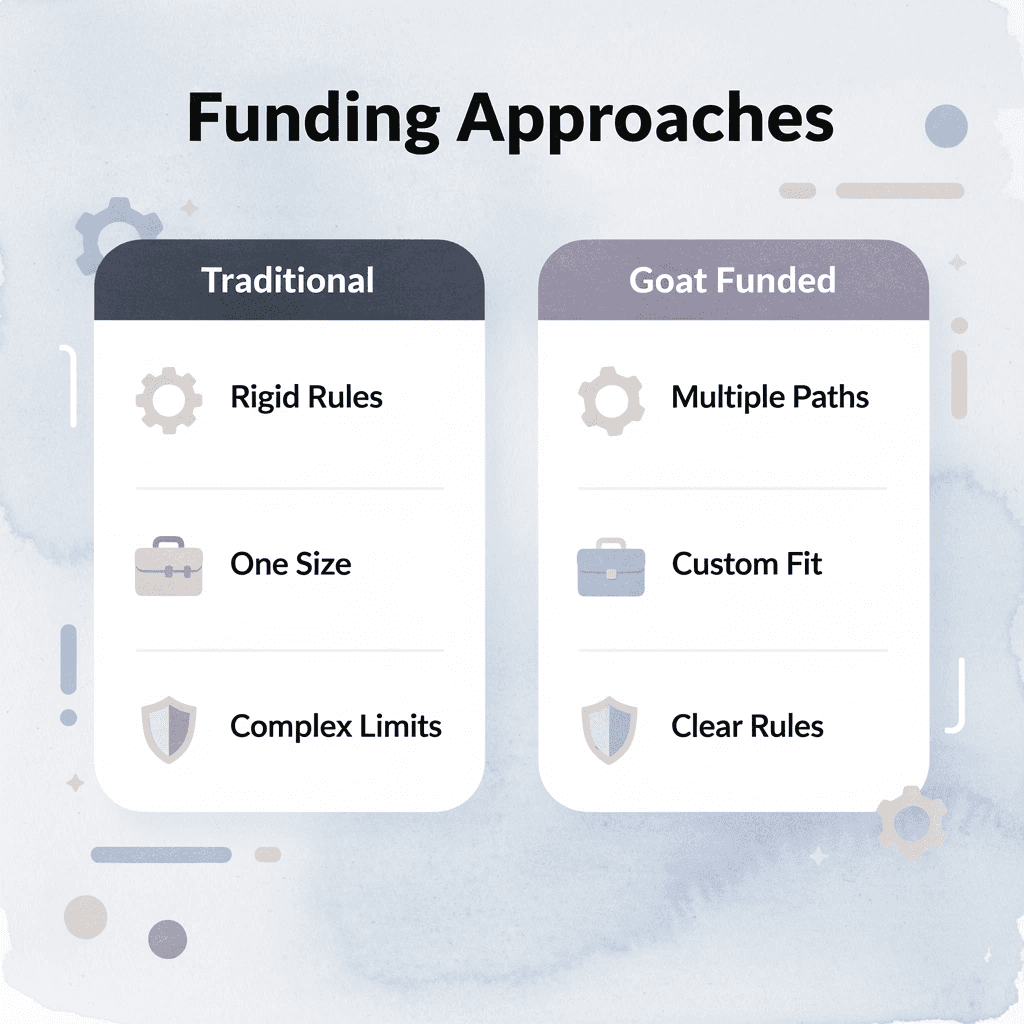
Goat Funded Futures builds its programs around the fact that different traders approach markets in different ways. Our programs offer multiple pathways for different experience levels, trading styles, and goals while maintaining clear, honest risk rules.
💡 Tip: Choose a funding program that matches your natural trading rhythm rather than forcing yourself to adapt to rigid structures.

"When funding structures align with trading approaches, risk controls become easier to maintain and consistency improves dramatically." — Trading Psychology Research, 2024
Risk Management Approach | Traditional Funding | Goat Funded Futures |
|---|---|---|
Flexibility | Rigid rules | Multiple pathways |
Trader Styles | One-size-fits-all | Customized approaches |
Risk Controls | Complex restrictions | Clear, honest rules |
EOD Program
Watching your account's biggest loss during the day diverts focus from making trades to protecting your money, making it harder to stick to your plan when normal price changes temporarily push your positions into a loss before they bounce back.
The EOD Program instead calculates drawdown at the end of each day. Traders manage their positions based on their strategy without monitoring their account value constantly. For traders who hold positions through intraday volatility or add to trades over multiple entries, this setup reduces stress. Risk management becomes about following your plan, not managing the funding model.
Sprint and Instant Funded Programs
The Sprint Program provides faster access to funded accounts, while the Instant Funded Program eliminates evaluations, allowing experienced traders to start executing immediately.
These options matter because evaluation structures that don't match your trading style create unnecessary pressure. According to Goat Funded Futures, prop firms typically keep 80-90% of profits, while traders receive 10-20% of the profits; our model flips this by offering up to 100% profit share on the first $10,000. When traders control more earnings and select structures that fit their approach, risk management becomes easier because they're not fighting the framework.
Transparent Costs and Profit Retention
Risk management means protecting the money you've already made, not just stopping losses. Hidden costs and surprise deductions after payment erode trust and frustrate traders who've earned their performance.
Goat Funded Futures addresses this through zero activation fees, no mandatory buffers, and transparent one-time costs. This approach lets traders know exactly what they're keeping, allowing them to focus on execution rather than navigating fee structures.
Why Program Choice Affects Risk Discipline
Traders constrained by mismatched funding models make different choices from those with aligned support. Strict or unclear rules create stress, leading to rushed trades, broken processes, and preventable mistakes. Selecting a funding model that fits your trading style is essential to sustainable risk management because it eliminates friction between how you trade and how you're evaluated.
But the right structure alone doesn't determine whether traders will succeed over the long term.
Start Trading Futures Today with our Futures Prop Firm
The structure of your trading setup determines whether you survive long enough to make money. Your chosen firm either supports disciplined trading or works against you through bad incentives, hidden costs, or performance metrics that penalize controlled risks.
🎯 Key Point: The right prop firm becomes your trading partner, not your obstacle to profitability.

"Up to 100% profit share on your first $10,000 helps traders focus on risk management and building consistency." — Goat Funded Futures, 2024
Want to trade with a prop firm built around realistic risk management? Explore Goat Funded Futures and choose from the EOD, Sprint, Instant Funded, or Pro programs. Our transparent one-time fees, no activation fee, no mandatory buffer, and up to 100% profit share on your first $10,000 let you focus on managing risk and building consistency. Start your challenge today and take the next step toward becoming a funded futures trader.
🔑 Takeaway: The best prop firms eliminate hidden barriers and align their success with your trading success.
Related Reading