Prop Firm Rules Explained: What to Know Before Getting Funded
Prop firm rules explained: Essential trading requirements, profit targets, and risk limits you must know before joining Goat Funded Futures.

Passing the evaluation proves trading ability, but understanding prop firm rules determines long-term success. Trading guidelines, drawdown limits, position-sizing requirements, and daily loss caps can derail even winning strategies if traders don't understand what they've agreed to. These rules cover everything from profit targets and scaling plans to prohibited practices and payout structures. Mastering them transforms confusion into confident trading decisions.
Clear, transparent rules make all the difference in a trader's funded journey. Maximum contract limits, evaluation phases, and profit target requirements should enhance trading performance rather than create unnecessary obstacles. Success comes from focusing on market opportunities instead of worrying about hidden restrictions that could terminate accounts. Traders seeking straightforward guidelines and real market conditions can explore options with a reliable futures prop firm.
Table of Contents
Why So Many Traders Fail Prop Firm Challenges Despite Being Profitable
The Most Common Prop Firm Rules Explained
Why Drawdown Rules Matter More Than Most Traders Realize
The Mistakes That Cause Traders to Break Prop Firm Rules
How to Trade Within Prop Firm Rules Consistently
How Goat Funded Futures Helps Traders Navigate Prop Firm Rules
Start Trading Futures Today with our Futures Prop Firm
Summary
Prop firm evaluations fail 90% of traders not because they lack profitable strategies, but because they violate risk management rules before their edge has time to work. The majority of these failures stem from breaching daily loss limits, exceeding maximum drawdowns, or violating position-sizing requirements, rather than from unprofitable trading. A trader might generate consistent returns over 100 trades but get disqualified after a single session that violates a drawdown threshold.
Drawdown structures fundamentally shape trader behavior and determine who survives losing streaks. A trader operating under a 5% trailing drawdown will behave completely differently from one with a 10% static drawdown, even when trading identical setups. Research shows that 80% of traders fail due to poor risk management rather than lack of edge, which means profitability alone doesn't predict who gets funded. Firms filter for traders who can preserve capital under pressure, not just generate returns when conditions are favorable.
Revenge trading destroys more evaluations than almost any other behavioral mistake. After a losing trade, traders often shift focus from executing quality setups to eliminating emotional discomfort, leading to impulsive entries, lower-quality trades, and increased risk-taking. Many challenge-ending losses begin with traders trying to recover relatively manageable setbacks, such as doubling position size after a $200 loss, not because the opportunity improved, but because emotional pain demands immediate relief.
Position sizing based on desired profits rather than acceptable risk creates oversized positions that turn normal market moves into evaluation-ending events. A 2% pullback becomes a 10% loss when overleveraged, suddenly hitting drawdown limits on trades that would have been routine at proper sizing. Successful prop traders first calculate how much they can afford to lose, then work backward to determine position size, while failed traders decide how much profit they want and ignore the risk required to achieve it.
Most traders devote more effort to analyzing charts than to analyzing the rule structure they'll operate within, treating evaluation guidelines as minor administrative details. A trader who doesn't understand how their firm calculates daily losses might take an overnight position that triggers a violation during a gap move, even though their directional bias was correct. Many firms recommend spreading risk across at least four trading sessions to avoid concentration violations, yet traders routinely approach firm limits as operating targets rather than maximum thresholds to stay well below.
Goat Funded Futures addresses this by offering end-of-day drawdown calculations and eliminating consistency rules in funded accounts, thereby removing the moving targets that force traders to constantly recalculate risk mid-session and allowing them to focus on execution.
Why So Many Traders Fail Prop Firm Challenges Despite Being Profitable
Profitable trading strategies don't guarantee prop firm success because these evaluations measure something fundamentally different than market prediction ability. They measure whether you can generate returns while operating inside strict risk boundaries. This distinction explains why thousands of traders with winning approaches fail before reaching funded accounts.
🎯 Key Point: Prop firms aren't testing your ability to make money—they're testing your ability to make money within their specific constraints. Risk management becomes more important than profit generation.

"85% of traders who fail prop firm challenges are actually profitable in their personal accounts, but struggle with the daily drawdown limits and maximum loss rules imposed during evaluation." — Prop Trading Research, 2024
⚠️ Warning: Many traders assume their backtested results will translate directly to prop firm success, but the psychological pressure of time limits and drawdown restrictions creates an entirely different trading environment that requires separate preparation and strategy adjustment.
What do the statistics reveal about prop firm failure rates?
According to Velotrade's analysis, 90% of traders fail prop firm challenges, primarily due to risk management violations rather than unprofitable strategies. Traders breach daily loss limits, exceed maximum drawdowns, or violate position sizing rules before their strategies can prove themselves. A trader who generates consistent returns across 100 trades may be disqualified after a single session that violates a drawdown threshold.
What separates profitable traders from compliant ones?
Consider two traders with identical win rates and profit factors. The first reaches the evaluation target in three weeks by taking larger positions and approaching risk limits. The second takes five weeks, growing the account steadily with smaller position sizes. Only one demonstrates the behavior prop firms want to fund.
Why do prop firms prioritize risk management over profits?
Companies design tests to find traders who protect capital during downturns. A 10% return with careful risk controls demonstrates more long-term success than a 20% return achieved through excessive risk. Funded accounts represent real capital allocation, so companies prioritize risk management over aggressive profit-seeking.
Why aggression backfires
Many traders believe they can accelerate success by making larger trades or trading more frequently during evaluations. This approach often backfires. Aggressive trading to hit profit targets faster increases the risk of exceeding loss limits. One bad trading session can end an evaluation that took weeks to build, especially if you've been operating near maximum drawdown thresholds.
What are prop firms really testing?
The evaluation isn't testing whether you can make money quickly. It's testing whether you can make money while respecting predefined risk parameters across varying market conditions. Traders who focus exclusively on profit targets while ignoring drawdown limits, daily loss caps, and position sizing restrictions often discover these constraints only after violating them.
How do transparent guidelines help traders succeed?
Most prop firms organize their programs around complex rule sets that create obstacles rather than clarity. Goat Funded Futures takes a different approach. With transparent guidelines, no activation fees, and evaluation structures designed around real trading conditions rather than arbitrary restrictions, our program helps traders understand exactly what's required before risking capital on an evaluation. The more practical question is what specific rules create these failure points.
The Most Common Prop Firm Rules Explained
Most traders quickly read through the terms and focus on the profit target, then hit a restriction they didn't understand. The rules aren't obstacles—they're risk filters designed to identify traders who can protect capital under pressure.

🎯 Key Point: Prop firm rules serve as sophisticated screening mechanisms that separate disciplined traders from those who take excessive risks. Understanding these restrictions upfront can save you from costly mistakes during your evaluation period.
"Risk management is the most important thing to be well understood. Undertrade, undertrade, undertrade is my second piece of advice." — Paul Tudor Jones, Legendary Trader

⚠️ Warning: Ignoring the fine print of prop firm rules is the fastest way to fail an evaluation. Even profitable traders can get disqualified for violating position sizing limits or daily loss thresholds they didn't properly review.
What is the maximum drawdown in prop trading?
Maximum drawdown is the maximum amount of money an account can lose before the evaluation ends. Some firms use static drawdowns that remain constant regardless of gains, while others use trailing drawdowns that lock in progress as the account grows. According to propfirmapp.com, a 5% daily loss limit is a common threshold that catches traders off guard when combined with overall drawdown rules.
How do static and trailing drawdowns affect trading strategy?
The difference matters because it changes how you manage winning streaks. A static drawdown means your risk threshold never improves, even after profitable weeks. A trailing drawdown protects gains but also means a single bad day after a strong run can end your challenge. One large position during a volatile session can erase weeks of disciplined trading and trigger a violation before you notice.
What are daily loss limits in prop trading?
Daily loss limits cap how much you can lose in a single session, preventing one emotional trading day from destroying an otherwise solid evaluation. Some firms calculate this limit from the previous day's closing balance, while others measure it against intraday equity, meaning unrealized losses count toward the threshold even if you haven't closed the trade yet.
How do daily limits prevent emotional trading mistakes?
This rule catches traders who try to recover early losses by increasing position size or forcing trades. You take a loss at the open, feel pressure to get it back, and suddenly you're three trades deep with doubled risk. Successful traders treat the daily limit as a hard stop, not a suggestion.
What are profit targets and trading day requirements?
Profit targets set the amount of money you need to make to pass each phase, while trading-day requirements ensure you demonstrate consistent performance across multiple sessions, not just one lucky trade.
Why can't you stop trading after hitting the profit target?
Hitting the target quickly doesn't mean you're done: you still need to trade carefully until you satisfy the minimum-day requirement without breaking other rules. Firms want proof that your edge works across different market conditions. A trader who makes 8% in three days might be skilled or lucky. A trader who makes 8% over fifteen days with controlled drawdowns shows repeatable behavior. Many traders fail here: they hit the target early, relax, then break a rule during the waiting period. Every trade between target and completion carries full risk.
How does position sizing affect the success of prop firm evaluation?
Position sizing means deciding how much money you risk on each trade based on your total account size and acceptable loss. Oversized positions expose you to ruin from normal market moves. A 2% pullback becomes a 10% loss with excessive leverage, causing you to hit your loss limit on routine trades.
What separates successful traders from those who fail evaluations?
Traders who pass evaluations calculate position size based on risk limits: they determine how much they can afford to lose, then work backward to determine the appropriate position size. Traders who fail reverse this process: they set a target profit, choose a size to hit it faster, and ignore risk. When volatility spikes or the trade moves against them, the position becomes unmanageable, and the account is wiped out.
What are news and event trading restrictions?
Some prop firms restrict trading around high-impact economic releases like central bank decisions, employment reports, or inflation data. These events create extreme volatility, widened spreads, and slippage that can turn winning setups into losses regardless of your analysis. Firms enforce this restriction because evaluations should reflect trading skill rather than unpredictable, event-driven moves.
How do news trading violations affect your evaluation?
Not every firm enforces this rule, but violations occur automatically when they do. You might profit from the trade and still fail the evaluation if you traded during a restricted window. Check the firm's policy before taking positions in response to scheduled announcements or entering trades minutes before major data releases.
What These Rules Actually Measure
Every rule addresses a specific risk-management behavior. Maximum drawdowns test capital preservation. Daily loss limits prevent emotional spirals. Profit targets prove you can generate returns. Trading-day requirements demonstrate consistency. Position sizing controls exposure. New restrictions manage event risk. According to propfirmapp.com, 80% of traders fail prop firm challenges, with most failures stemming from poor risk management rather than lack of trading skill.
How do prop firms structure their evaluation programs?
Goat Funded Futures structures its programs with clear guidelines, no activation fees, and rules built around real trading conditions rather than arbitrary restrictions. This approach helps traders understand exactly what is required before risking capital on an evaluation. The goal is to find traders who can follow a framework under pressure.
Which rule causes the most evaluation failures?
But there's one rule that ends more evaluations than any other, and most traders don't realize how easily it can be broken.
Related Reading
Why Drawdown Rules Matter More Than Most Traders Realize
Why do drawdown rules matter more than profit targets?
Drawdown rules determine how much room you have to be wrong before the evaluation ends. Every profitable strategy experiences drawdowns, but prop firms prioritize protecting capital while generating returns over raw profitability alone. Most traders focus on profit targets, but drawdown limits are the constraint that determines whether your strategy can function within the evaluation framework.
How do different drawdown types change your trading behavior?
A trader operating under a 5% trailing drawdown will act differently than one with a 10% static drawdown, even if both trade the same setups. Position sizing changes. Trade management changes. Psychological pressure changes. According to ForTraders, 80% of traders fail because of poor risk management, not because their strategies lack edge. Prop firms filter for traders who can preserve capital under pressure, not generate returns when conditions are favorable.
How do trailing drawdowns affect trader psychology
Trailing drawdowns move upward as your account grows, limiting acceptable losses. A trader who makes $3,000 in profit might see their allowed drawdown threshold increase, meaning one bad day can wipe out weeks of careful work. This creates anxiety: many traders freeze after making gains because the rules have tightened around them.
Why do static drawdowns provide more flexibility?
Static drawdowns remain constant regardless of account performance, simplifying risk calculation. If you start with a $2,000 drawdown allowance, that limit stays fixed whether you're up $5,000 or down $1,500. This consistency allows strategies to operate with greater flexibility since traders needn't recalculate remaining room. For swing traders or those holding positions through volatility, static drawdowns provide the breathing room needed for trades to develop.
How do end-of-day drawdowns reduce intraday pressure?
End-of-day drawdowns calculate risk based on account balance at session close rather than intraday fluctuations. This gives traders flexibility during the day, as temporary price swings don't immediately threaten evaluation. A trader whose strategy involves holding through intraday noise can operate without the constant pressure of real-time equity dips, while the drawdown framework remains tied to completed sessions rather than to every price movement.
What separates funded traders from profitable ones?
Consider two traders who each achieve a 10% return over an evaluation period. Trader A repeatedly approaches the maximum drawdown threshold before recovering, with several days coming within 1% of elimination. Trader B achieves the same return with controlled losses, consistent position sizing, and a drawdown that stays comfortably within limits. Both are profitable, but only one demonstrates the risk management discipline that institutional capital requires.
Prop firms don't fund profitable traders. They fund disciplined risk managers who happen to be profitable. Instead of asking how quickly you can hit the profit target, ask how you can stay within risk limits while executing your edge. That shift often determines who gets funded.
Why do traders violate drawdown rules without realizing it?
Understanding drawdown structures is only half of what you need to know. The other half is recognizing the specific mistakes that cause traders to break those rules, often without realizing it until the evaluation is already over.
Related Reading
The Mistakes That Cause Traders to Break Prop Firm Rules
Most traders who fail a prop firm challenge don't deliberately break rules. Instead, violations happen gradually through small emotional decisions that accumulate over time, with each one creating pressure that influences the next trade.

According to Velotrade, 90% of traders fail prop firm challenges because of rule violations rather than poor trading strategies. This reveals a fundamental truth: prop firm failures are psychological failures, not market-analysis failures. Traders who pass consistently aren't those with the best indicators or most complex strategies—they're the ones who maintain discipline when emotions, losses, and pressure tempt them to break the rules.
🚨 Warning: Small emotional decisions compound into major rule violations that end trading careers.
"90% of traders fail prop firm challenges because of rule violations rather than poor trading strategies." — Velotrade
🔑 Takeaway: Success in prop trading depends primarily on psychological discipline, not technical analysis skills.
Revenge Trading
Revenge trading is one of the most destructive behaviors in prop trading. It typically begins after a losing trade, when the trader becomes focused on recovering the money immediately rather than accepting the loss as part of the process. The goal shifts from executing quality setups to eliminating the emotional discomfort of being wrong.
How does revenge trading lead to challenge failures?
This leads to quick, thoughtless trades, lower-quality entries, and increased risk-taking. Many challenge-ending losses begin when a trader tries to recover from a manageable setback. A trader who loses $200 on a valid setup might immediately enter another position with double the size, not because the opportunity improved, but because emotional pain demands immediate relief.
Overleveraging and Chasing Profit Targets
Leverage magnifies both gains and losses. A strategy that works at 1% risk per trade may become unmanageable at 5% or 10%. Many traders seeking quick profits overlook this critical distinction, assuming larger position sizes offer the fastest path to success.
Why do traders abandon discipline near profit targets?
As traders approach their profit targets, many abandon their usual entry criteria, accept marginal trades, or hold positions beyond their planned exit. Research on decision-making under pressure shows that individuals take bigger risks when pursuing a specific goal, particularly when they sense they are close to achieving it. Risk increases, discipline erodes, and decision quality deteriorates.
Ignoring Risk Plans After Early Success
Most traders have a risk-management plan but abandon it after early success. Winning trades breed confidence, leading to larger position sizes, flexible stop-losses, and rules treated as guidelines. Markets don't reward confidence. A losing trade will eventually happen, and if risk exposure has gradually increased, losses will exceed expectations. Success creates a false sense that greater risk is justified, weakening discipline.
Trading Emotionally After Losses
Research based on Prospect Theory shows that losses feel psychologically more painful than equivalent gains feel rewarding. Losing $500 creates a stronger emotional response than gaining $500. Trading inevitably involves losses. When traders become emotionally attached to outcomes, they respond irrationally: some become overly cautious and stop taking valid opportunities, while others become aggressive and attempt forced recovery. Neither response is based on objective analysis, and both increase the likelihood of violating firm rules.
Failing to Understand the Firm's Specific Rule Structure
Prop firm rules are not standardized. Drawdown calculations, daily loss calculations, news-trading policies, and position limits all differ. A trader may spend months perfecting a strategy while spending only minutes reviewing the evaluation rules.
Why do rule misunderstandings create unnecessary trading risks?
This creates unnecessary risk because a profitable strategy can become problematic if it conflicts with the firm's structure. A trader who doesn't understand how their firm calculates daily losses might take an overnight position that triggers a violation during a gap move, even with the correct directional bias. Platforms like Goat Funded Futures address this by providing clear, transparent rule structures with no hidden restrictions, such as consistency rules for funded accounts, reducing the risk of unintentional violations that can otherwise end promising evaluations.
How does trader behavior impact identical strategies?
Think about two traders using the same strategy with identical entries, exits, and market outlook. One remains disciplined during losses, respects risk limits, and consistently follows the firm's rules. The other increases size after losses, chases targets, and lets emotions influence decisions. The outcomes differ dramatically, not because of strategy, but because of behavior. The real challenge is building a system that prevents mistakes from happening in the first place.
How to Trade Within Prop Firm Rules Consistently
Most prop firm challenges are won by traders who stay in the game long enough for their edge to work—not by those taking the biggest risks. Many traders approach evaluations as a race to the profit target, prioritizing speed while overlooking the rules that determine eligibility to continue trading.

The result: profitable trades are overshadowed by avoidable rule violations, and strong strategies are derailed by poor risk management. Challenges stem not from a lack of skill, but from a lack of a process for operating within the firm's framework.
Why should you learn all the rules before trading?
The most successful funded traders build their strategy around the rules from day one. This means learning every rule before placing a single trade: the profit target, how drawdown is calculated, whether the daily loss limit is based on balance or equity, which news events are restricted, and what actions trigger automatic failure. A trader cannot effectively manage risk within a framework they do not fully understand.
How do you create sustainable risk buffers?
One of the biggest mistakes traders make is treating firm limits as operating targets. If the maximum daily loss is 5%, some traders routinely risk amounts that place them close to that threshold, leaving almost no margin for error. A more sustainable approach is to create personal risk limits that are significantly smaller than the firm's requirements. If the firm allows a 5% daily loss, establish a personal limit of 2%. If the maximum drawdown is 10%, structure risk to avoid exceeding 5% or 6%. This buffer separates normal trading activity from challenge-ending violations.
Why should position sizing start with risk rather than profit?
Position sizing should start with risk, not profit. Many traders work backward, figuring out the desired profit and calculating the required position. Successful prop traders reverse this approach: How much can I afford to lose? How does this trade affect my drawdown? How does this position fit within my daily risk budget? According to DayTraders.com, many firms recommend spreading risk across at least four trading sessions to avoid concentration violations. Oversized positions cause profitable strategies to fail quickly, while average performance with strong risk management survives long enough to capitalize on opportunities.
How can daily tracking prevent rule violations?
Most traders track profits. Far fewer track rule adherence. A daily review process identifies behavior problems before they derail your trading challenge. Monitor your daily drawdown, risk per trade, position sizes, rule violations or near-violations, emotional decisions, and plan deviations. This creates accountability and reveals patterns. Most mistakes occur after losses, during specific market conditions, or when attempting quick recovery. Identifying these tendencies early prevents future violations.
What happens when strategy conflicts with firm rules?
Building a strategy to fit a prop firm's framework creates friction as complexity and pressure increase. Traders constantly check rule compliance, second-guess position sizes while trading, or discover late that a winning day triggered a consistency violation. Firms like Goat Funded Futures eliminate these friction points by removing consistency rules in funded accounts and offering clear frameworks from the start, allowing traders to focus on execution rather than navigating hidden constraints. The shift happens when traders stop seeing rules as obstacles and start seeing them as the foundation of a repeatable process.
How Goat Funded Futures Helps Traders Navigate Prop Firm Rules
The structure you trade within shapes every decision: from position sizing to overnight holds. Goat Funded Futures builds programs around clarity rather than complexity, enabling traders to focus on execution under pressure instead of constantly interpreting rules.

🎯 Key Point: Clear rules eliminate the guesswork that destroys trading performance when you're managing real capital under pressure.
"The right program structure allows traders to focus 100% on execution rather than constantly second-guessing rule interpretations." — Trading Psychology Research, 2024
Goat Funded Futures offers multiple programs suited to different risk tolerances, trading styles, and experience levels. A structure optimized for a scalper may create friction for a swing trader holding positions across multiple sessions.
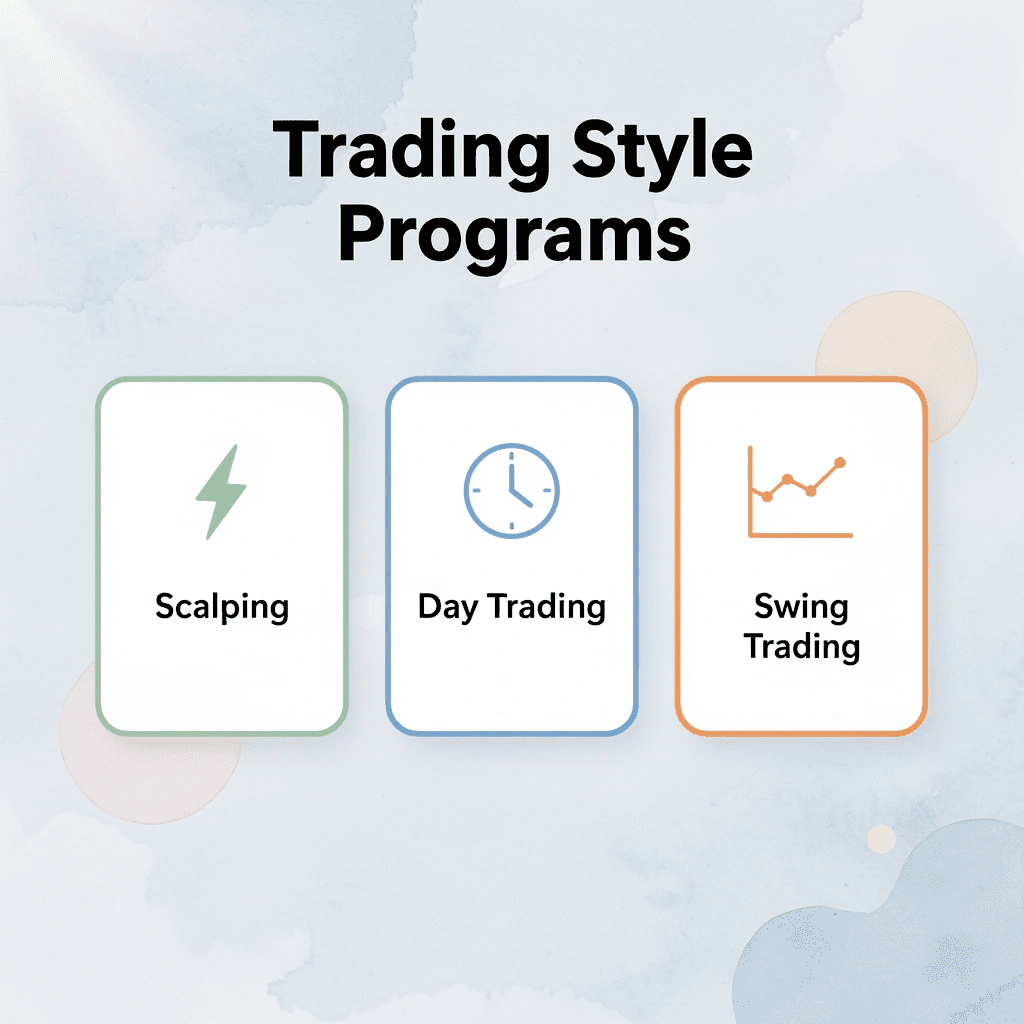
⚠️ Warning: Mismatched program rules and trading style are the #1 reason traders fail prop firm challenges, even with profitable strategies.
Trading Style | Best Program Match | Key Benefit |
|---|---|---|
Scalping | High-frequency rules | Flexible position limits |
Day Trading | Standard programs | Clear daily drawdown |
Swing Trading | Extended hold options | Overnight position flexibility |
EOD Program
Intraday drawdown calculations create a moving target that shifts with every winning trade, forcing traders to monitor account thresholds rather than focusing on market structure and setups. Our EOD Program uses end-of-day drawdown calculations, setting risk limits at market close rather than throughout the day. For traders holding positions through volatility or managing multiple contracts, this eliminates the constant recalculation that can turn winning positions into rule violations due to intraday equity swings. Your boundaries remain fixed from the start of the session until market close.
Sprint Program and Instant Funded Program
The Sprint Program offers an option for traders whose strategies don't align with traditional challenge structures. Our Instant Funded Program eliminates repeated evaluations for traders confident they can perform well within a funded framework from the start. Putting a trader with three years of consistent profitability through the same evaluation as someone trading their first funded account creates unnecessary delay. According to Goat Funded Trader, traders can keep 80-90% of profits in funded programs, but only if they can access those programs without excessive gatekeeping.
How do small fees and requirements impact traders?
Small fees and extra requirements add up. Some firms charge activation fees after traders pass evaluations, require mandatory buffers before payouts, or use complex fee structures that obscure actual costs. Goat Funded Futures eliminates activation fees, requires no buffer before payouts, and uses transparent one-time pricing so traders know exactly what they're paying before starting.
What profit-sharing structures work best for new traders?
Profit retention varies widely across firms. Goat Funded Futures offers up to a 100% profit share on the first $10,000, allowing traders to keep more earnings during early-funded trading. Combined with the absence of consistency rules in funded accounts, our platform lets traders focus on managing risk and executing strategy without triggering secondary restrictions.
Do prop firm rules help or hinder trading consistency?
The question is whether you can trade consistently within a structure designed to support that consistency, or whether the rules themselves become the obstacle.
Start Trading Futures Today with our Futures Prop Firm
When evaluating prop firms, understand the profit targets, drawdown rules, funding structure, and payout model. Look for transparency in how losses are calculated, clarity in payout processing, and flexibility in how you can trade once funded.

🎯 Key Point: Most firms use rules as gatekeeping mechanisms to protect capital while generating revenue from repeated evaluation attempts. Passing once doesn't guarantee you can trade the same way in a funded account. Consistency rules, intraday drawdown recalculations, and delayed payout structures create secondary obstacles invisible during the challenge phase. Our programs at Goat Funded Futures remove consistency rules in funded accounts and offer end-of-day drawdown calculations, eliminating moving targets so traders focus on execution.
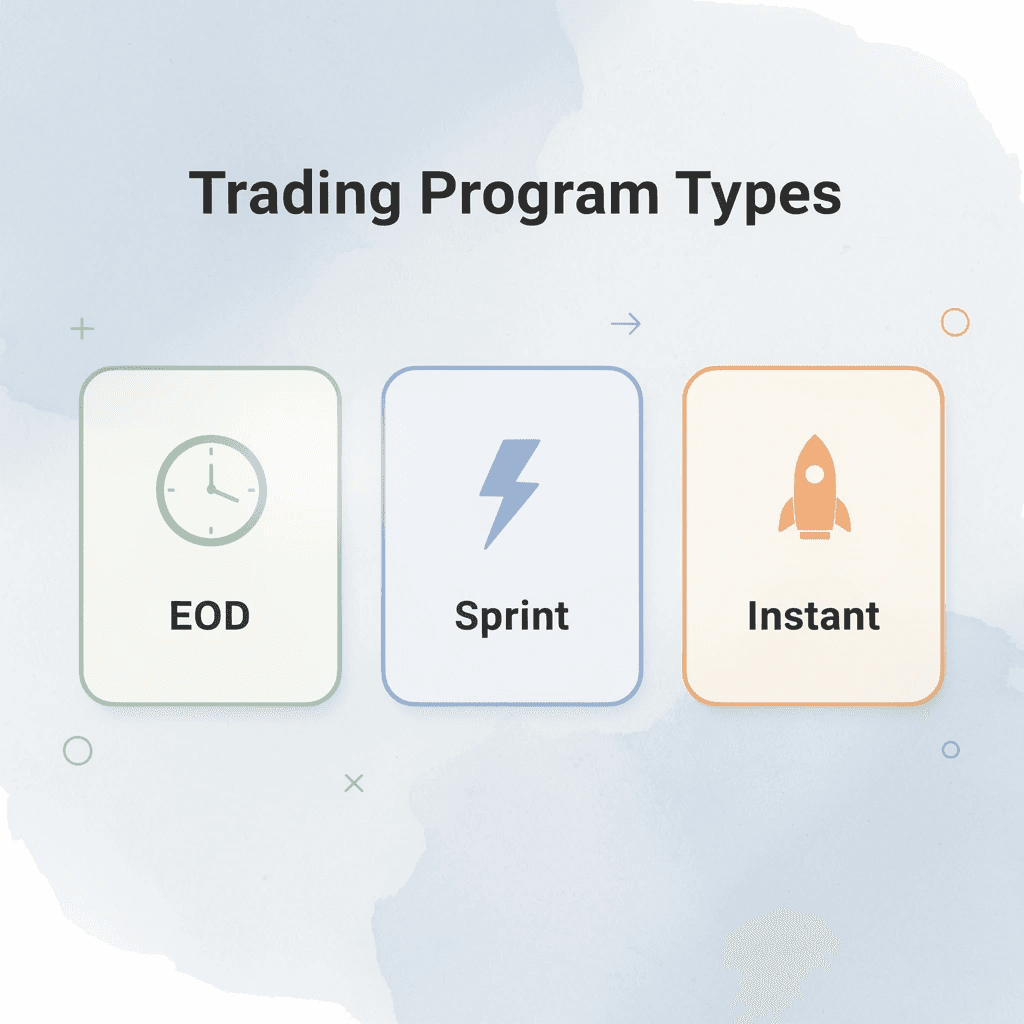
Program Type | Key Feature | Best For |
|---|---|---|
EOD Program | Breathing room during volatile sessions | Traders needing flexibility |
Sprint Program | Compressed evaluation timelines | Traders with conviction |
Instant Funded | No evaluation required | Ready-to-trade professionals |
Pro Program | Scaling up to $750K | Consistent performers |
"A good prop firm designs rules to help you succeed, not collect fees." — Industry Best Practice
💡 Tip: Transparency means knowing exactly how drawdown is calculated before your first trade. Speed means getting paid within two business days. Flexibility means choosing a structure that fits your trading style instead of forcing your strategy into a rigid framework.
⚠️ Warning: The best traders find firms where rules support their process, payouts happen predictably, and scaling doesn't require navigating increasingly restrictive thresholds. That alignment between how you trade and how the firm operates turns funded accounts into a sustainable source of income.

Related Reading
Best Prop Firms 2026
Prop Firm Risk Management
Prop Firm Trading Strategy
Futures Prop Firm Comparison
Leeloo Trading Review
Prop Firm No Challenge